Sunday, August 27, 2017

Food for Thought: Going Deeper with Empowerment


Dear all,

When I started this weeks Food for Thought I was going to share the article, seven magic mental health questions that every teacher should know. I still recommend that you read it but after this introduction. When I first read the article I took it at face value identifying difficult problems that we are constantly facing as we try to walk the talk of our mission whilst balancing that with our own workloads and life balance. Our mission encourages us to be welcoming and supportive of all our students but finding the time for this can be challenging. Hence my original thought was that this article might be of interest as it outlines seven questions that we can use to maximize the time that we give to students when we notice they are not firing on all cylinders, are stressed or have a problem. We could probably use the same questions with our colleagues when we note they are not their positive selves.

But then my mind started to go deeper and think about the framework that these questions started to create. This reminded me of the philosophy of stoicism and how we can control our lives by following well defined set of principles.


This started me thinking about empowerment and our desire to give students the skills necessary to take control of their lives. This provoked me to do some research and I began to realize how many characteristics of a stoic philosophy would be very useful for our students in facing the challenges of the 21st century. Especially as this philosophy is not passive but encourages the taking of action. During my search for information I came across this TED talk by Tim Ferris where he talks about how defining fears rather than goals has helped to set him free from depression and anxiety. When you watch this TED you will clearly see how useful his structured approach to facing fears could be for empowering our students to take control of their lives.


Throughout my research into stoicism Seneca was mentioned many times and this quote was a key one for Tim Ferris. I found this interesting because it links with what we learn about our mind from mindful guru's such as Eckhart Tolle.


Image result for we suffer more often in imagination than in reality

So, I have added a short talk by Eckhart Tolle talking about how our mind creates a delusion of self which is framed by words and statements that create concepts that the mind seeks to use to frame who we think we are. Of course if we apply the Tim Ferris framework to thought generated by the left of our mind and our ego the it would help us  uncover their true meaning and perspective and counter them with truer logical thoughts. Great leaders such as the Roman Emperor Marcus Aurelius and Nelson Mandela applied the principles of stoicism to their leadership and life's. Marcus Aurelius even created a set of meditations that encouraged stoic thinking.


Now when you read the article Seven Magic Mental Health Questions Every Teacher Should Know you can put them into a deeper philosophical framework of stoicism that could reinforce our mission goal of empowerment.

Have a good Sunday,

Yours
Adrian


Sunday, August 20, 2017

Food for Thought: Should we be advising our students to follow their passion?


Dear all,

This week's Food for Thought should make us think about the idea that has become quite popular of encouraging people/ students to follow their passion and they will be successful. What is interesting is that there is more and more research, articles and talks that would suggest this is not the best advice that we should be giving our students. What becomes clear in these studies is that there is far more to following your passion or in other words doing what you think you like most than at first meets the eye. Like most things we do at school there is a great deal of background thinking and development that needs to be undertaken before one is able to identify a true passion and one that one has the skills to follow successfully.

We often associate Sir Ken Robinson's book, The Element,  with an encouragement to follow our passion whereas in fact the book is about identifying/ uncovering your talents which will lead to having a passion that you will enjoy. When talking about undiscovered talents I always remember the story that Sir Ken and Sir John Jones tell about the High School that later became the Liverpool Institute for Performing Arts, and the fact that the then music teacher who taught Sir Paul McCartney and George Harrison, 50% of the Beatles, wrote school reports that said they had no musical talent.  Makes me think about how many students I may have misunderstood in my career. Anyway, here is a short video, 3 mins, in which Sir Ken talks about finding ones element.


Mike Rowe of Dirty Jobs fame,  raises some serious reservations in these two videos about advising people to follow their passion from his experience of working with people employed in over 200 different jobs. The first video is short. The Second is a TED which is quite humorous for the first 10 minutes talking about sheep rearing (castrating sheep) so if you don't fancy spoken imagery on this topic jump to around the 10 minute mark where he starts to talk about the idea of work and passion.


Reading and watching other articles and videos it is clear to me that we do need to develop a scope and sequence or at least a systematic approach to encouraging our students to discover their talents and then develop the skill necessary to follow their passion. We also need to recognize that it may not be their passion that they end up following but this is Ok as well. 

To end this week's Food for Thought I want to share this article, Why ‘Follow Your Passion’ Is Bad Advice, because it encourages the development of 7 habits, some of which we already think about in our classrooms, that which when applied to ideas like Google Hour, Think Tank Thursday, Passion Time need to be taken more seriously if we are going to be producing students who genuinely make the most of their talents and are successful in life.

Here is the conclusion to Why Follow Your Passion is bad Advice:


"Is passion a bad thing?
Understood rightly, no. But as the be-all-and-end-all? Yes.

Cal Newport’s prescription was skill: passion is the result of excellence, not it’s source.
Far from a magic bullet, passion can mislead us, blind us, and even turn us in on ourselves. Newport was right: “‘Follow your passion’ might just be terrible advice.” Thankfully, these seven habits put passion in its place so that the fire Jobs spoke of doesn’t burn out … but endures."
Have a good Sunday,

Yours
Adrian

The great thing about blogs is that you can add extra stimulation and so here is an additional TED related to multipotentials that i shared before but fits well with the idea of following your passion. simply what happens if you are multi talented and therefore don't just have one area of interest.


Sunday, August 13, 2017

Food for Thought: Words for the future.


Dear all,

Thank you for such a magnificent start to the new academic year. Everything about the last two weeks and especially the first three days with students has demonstrated an immediate engagement with our mission and vision. Greeting and talking to students at the front gate has been such a positive experience as the majority wanted to be back at school and said they thoroughly enjoyed their first few days back in classes. Not many schools can boast this degree of enthusiasm for going back to school at the end of a long vacation. Well done for creating this welcoming and engaging environment.

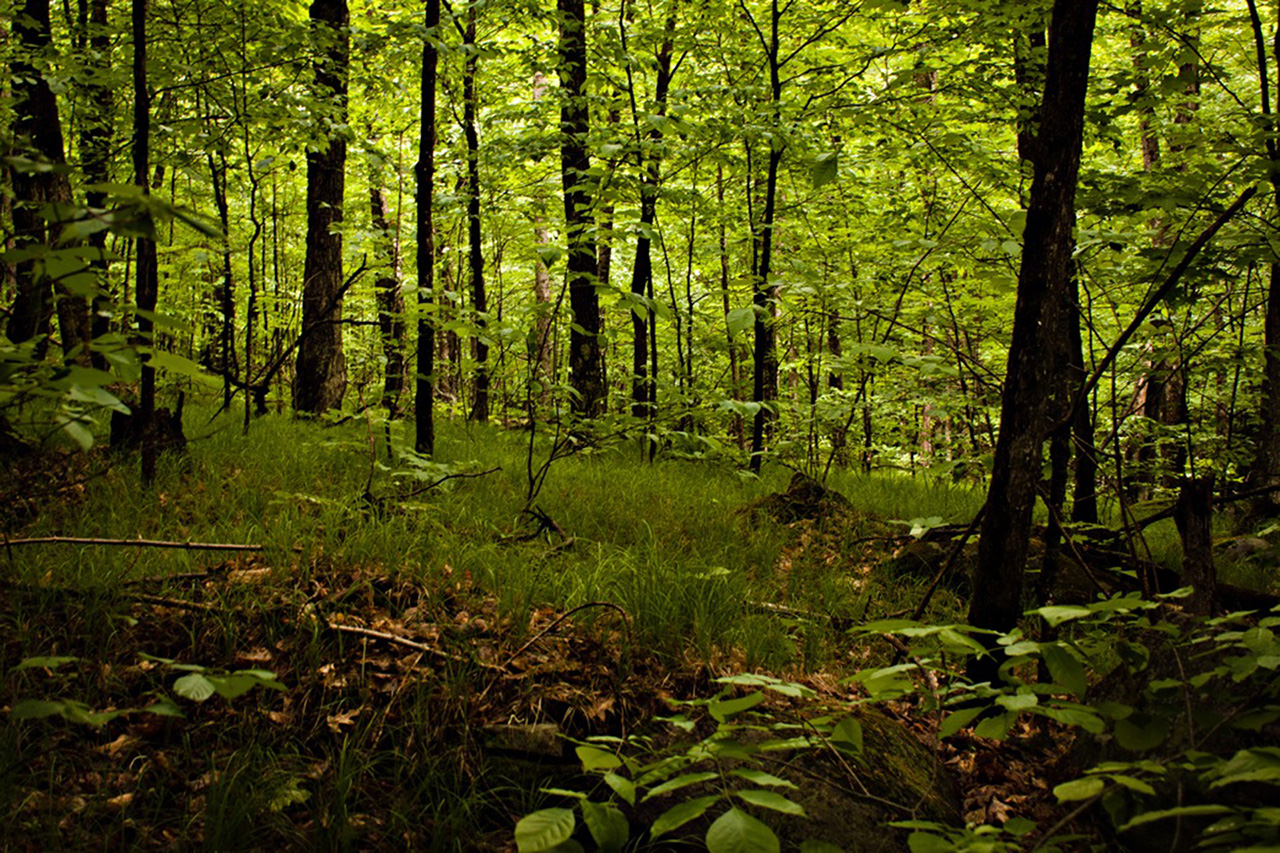
Rose Hill

http://mmlt.ca/protecting-nature/our-protected-properties/rose-hill-nature-reserve/

This week's Food for Thought is aimed at drawing your attention to a concern going back a few years regarding the provision of vocabulary that narrows students horizons and interests to the world which they are experiencing every day rather than the wider world which they could experience.

Preparing for the future will usher in changes to our lives and the skill that are needed but we will need to be careful to not over react and dismiss all the good things that existed in the past and that should accompany us into the future. There is definitely a need for balance. Nature and how we perceive it is one of these areas. As Richard Louv pointed out in his classic, Last Child in the Woods, it is important if we are to protect our environment that children today, and in the future, maintain a connection with nature. If not he argues we will be facing a crisis of nature deficit disorder and future generations will question the need to protect our environment. Just because children today appear to spend more time indoors with technology, than outdoors in the wild of nature, doesn't justify the changing vocabulary available in modern children's dictionaries over the past few years. If anything affirmative action should be taken to support words associated with nature so that children can ask questions about nature and want to explore it more. 

Here are some of the words that have been removed from the Oxford Junior Dictionary over the past few years that caused a storm amongst many renowned authors:


acorn, adder, almond, apricot, ash, ass, bacon, beaver, beech, beetroot, blackberry, blacksmith, bloom, bluebell, boar, bramble, bran, bray, bridle, brook, budgerigar, bullock, buttercup, canary, canter, carnation, catkin, cauliflower, chestnut, clover, conker, county, cowslip, crocus, cheetah, colt, corgi, cygnet, dandelion, diesel, doe, drake, fern, ferret, fungus, gerbil, goldfish, gooseberry, gorse, guinea pig, hamster, hazel, hazelnut, heather, heron, herring, holly, horse chestnut, ivy, kingfisher, lark, lavender, leek, leopard, liquorice, lobster, magpie, manger, marzipan, melon, minnow, mint, mistletoe, monarch, mussel, nectar, nectarine, newt, oats, otter, ox, oyster, pansy, panther, parsnip, pasture, pelican, piglet, plaice, poodle, poppy, porcupine, porpoise, porridge, poultry, primrose, prune, radish, raven, rhubarb, sheaf, spaniel, spinach, starling, stoat, stork, sycamore, terrapin, thrush, tulip, turnip, vine, violet, walnut, weasel, willow, wren
These are words that have been added:
allergic, alliteration, analog, apparatus, attachment, bilingual, biodegradable, block graph, blog, boisterous, brainy, broadband, bullet point, bungee jumping, cautionary tale, celebrity, chat room, childhood, chronological, citizenship, classify, colloquial, committee, common sense, compulsory, conflict, cope, creep, curriculum, cut and paste, database, debate, democratic, donate, drought, dyslexic, emotion, endangered, EU, Euro, export, food chain, idiom, incisor, interdependent, MP3 player, negotiate, square number, tolerant, trapezium, vandalism, voicemail

What does it say to you about how publishers view the future? Strange as there is so much research linking our well-being to nature and being outside in the countryside and yet here we are influencing our children's understanding of the wild by restricting their vocabulary. Here is a good article that encourages getting children into nature.

Here is what Terry Williams thought: "If we can remove words from a dictionary that are so alive with meaning, and withhold them from our children, removing what is alive in the world becomes easy. The wild is no longer part of our vocabulary." Source: Terry Tempest Williams, The Hour of Land: A Personal Topography of America's National Parks

Lots for us to think about in the way we develop our balanced curriculum and learning environments.

Have a good Sunday,

Yours
Adrian

Sunday, June 11, 2017

Food for thought for planning for next year wherever you are.

Dear all,

As another successful year comes to a close at ISHCMC I believe we can be proud of many of the things that we are achieving. Our vision for education is constantly being reinforced and strengthened by researchers and journalist who are awakening to the fact that tomorrow will be different from yesterday. Hence, as this will be my last Food for Thought for this academic year I have decided to continue with my theme of the past few weeks because this will be something that we need to give attention to next year at school; the identification, scope and sequencing and subsequent tracking of the skills that we believe will be important for the future of our students.

I believe that we are pushing education in the right direction and that our students are being energized, engaged and empowered by their learning. Hence I decided to have two sections to this weeks Food for Thought. the first is introducing you to the Institute for the Future and their thinking. This is a document I'd like you all to read, Future Work Skills for 20120 that they have produced that could form the foundation for how we look at and frame our skills needed by our students for their future's. It links very closely with my last few posts.

"In the 1990s, IBM’s Deep Blue beat grandmaster Gary Kasparov in chess; today IBM’s Watson supercomputer is beating contestants on Jeopardy. A decade ago, workers worried about jobs being outsourced overseas; today companies such as ODesk and LiveOps can assemble teams “in the cloud” to do sales, customer support, and many other tasks. Five years ago, it would have taken years for NASA to tag millions of photographs taken by its telescope, but with the power of its collaborative platforms, the task can be accomplished in a few months with the help of thousands of human volunteers. 
Global connectivity, smart machines, and new media are just some of the drivers  reshaping how we think about work, what constitutes work, and the skills we will need to be productive contributors in the future. 
This report analyzes key drivers that will reshape the landscape of work and identifies key work skills needed in the next 10 years. It does not consider what will be the jobs of the future. Many studies have tried to predict specific job categories and labor requirements. Consistently over the years, however, it has been shown that such predictions are difficult and many of the past predictions have been proven wrong. Rather than focusing on future jobs, this report looks at future work skills—proficiencies and abilities required across different jobs and work settings. "

The report concludes with this advice for educational insitutions:

"Educational institutions at the primary, secondary, and post-secondary levels, are largely the products of technology infrastructure and social circumstances of the past. The landscape has changed and educational institutions should consider how to adapt quickly in response. Some directions of change might include:
 » Placing additional emphasis on developing skills such as critical thinking, insight, and analysis capabilities
 » Integrating new-media literacy into education programs
 » Including experiential learning that gives prominence to soft skills—such as the ability to collaborate, work in groups, read social cues, and respond adaptively
 » Broadening the learning constituency beyond teens and young adults through to adulthood
 » Integrating interdisciplinary training that allows students to develop skills and knowledge in a range of subject"

To end this Food for Thought I'm going to share this video, The Elephant in the Classroom. I believe this talk raises questions that all of us at ISHCMC have been thinking about over the past four years. But instead of so many schools and systems who have ignored the elephant in the room we have as a group of educators faced our fear of change and started down the road to creating a school that is fit for preparing students for their place in the 21st century. The opening of the new secondary campus and the additional refurbishment of our present primary campus will further display our commitment to this change whilst providing all of us with the opportunities to further demonstrate that we are educators for the 21st century.


Thank you for a wonderful year at ISHCMC. None of what we have achieved would have been possible without your open mindedness and commitment to our mission and students.

Only three days left of the year.

Have a relaxing Sunday,

Yours
Adrian

Sunday, June 4, 2017

Dear all,

Hope you all enjoyed the staff party last night at the end of  yet another wonderful week at ISHCMC. We have achieved so much this year and time has flown by that it is often hard to stop and put what we are doing into perspective. in the last 7 days we have had an outstanding Graduation for the Class of 2017, a PYP exhibition that powerfully demonstrated the ability of our students to articulate their creativity and thinking that was seized upon by the IBO and shared globally through a webinar in which our students were again outstanding. Add to this chess tournaments, Grade 10 work experience, string ensembles, live outdoor music assessments, students selling at our own Market@the square and one see how we continue to build diversity of opportunity at ISHCMC. With 8 days of the year left, we are in for a very exciting end to the year, looking at our calendar everyday is full of great learning activities and celebratory events.

This weeks Food for Thought is really a consolidation on the thinking that I hope I have provoked over the last few weeks. The first video is is a humorous TED by Garry Kasparov talking about why we should not fear artificial intelligence. The talk tracks his relationship and famous battle with Deep Blue through to his work today alongside computers. It again emphasizes that technology is an opportunity to be embraced not something that we should be scared about. It just means we have to accept and work with artificial intelligence not against.


A second consolidation of our thinking comes from the Andraka family. Here is mother Jane Andraka giving advice to parents about what they need to do to support and prepare their children for their lives. Of course being an ISHCMC parent reduces the need to follow some of her instructions because many of her ideas are ones that we are trying to follow  in school. These ideas are fully supported in our mission. Obviously energized, engaged and empowered students are far more likely to be creative and innovate. but deeper than that within our Achievement Culture we use supportive language, ensure that our rules do not create a box in which students live and through this environment we encourage students to develop their interests, take risks, fail and try again. It is important that our hidden curriculum is not about teaching students obedience and uniformity but rather how to be successful and be the best they can be. 

Some good quotes at the end that create an environment for a a growth mindset:
  • Problems in the world are opportunities
  • Innovation comes from discontent
  • Petty rules stifle creativity so have less rules and more independent thinking
  • If you live inside the box it is hard to think outside of it.


Now you might be thinking its alright for a mother to make such a suggestion but how about the proof. Well here is her son talking on TED about his work regarding pancreatic cancer. As they say the proof of the pudding is in the eating. For me the question for us to think about is if this student had these ideas at ISHCMC would we have been like the 199 university professors who dismissed them as rubbish or incorrect procedure, or, would we have encouraged the idea to flourish with our support?


 For me the question for us to think about is if this was an ISHCMC student who had these ideas would we have been like the 199 university professors who dismissed them as rubbish or incorrect procedure, or, would we have encouraged the idea to flourish and supported his idea? Who are we as a school?

If you want to find out more about what Jake Andraka is doing to do there are several more recent video on youtube for you to watch.

Have a good Sunday,

Yours
Adrian

Sunday, May 28, 2017

Food For Thought: Have we prepared the class of 2017 well enough?

Dear all,

Thank you to everyone involved in organizing and preparing for the Class of 2017 Graduation. Students and parents appeared to have enjoyed the ceremony. I'd also like to thank all teachers who attended the ceremony because this is important for students and parents as it creates a feeling of togetherness and caring that is important for strengthening our community.

Leading up to this graduation I calculated that this was the 35th set of students that I have seen complete their secondary education. While reflecting upon this, the question came to my mind, as it often does, are we preparing our students well enough for their futures? I thought about this long and hard whilst writing and rewriting what I wanted to say to the Class of 2017 last night. I concluded that until around 2000 I believe we were doing less harm to our graduating classes by allowing a post industrial model for education pedagogy, curriculum and systems to frame our work. I say less harm only because the world, although changing relatively quickly, had not fully realized the potential of the technology that was beginning to emerge and dismissed projections like Singularity as being science fiction and the thinking of dreamers. In 2000, the employment market was still fairly predictable in the short term, so for graduates the impact of technology was still relatively distant. No-one realized how quickly this was about the change. However, since 2000 it has become increasing obvious that the world and many of the things held true before 2000 would not be valid by 2017. 

For all of us involved in education we have reached a point where the education system, founded in the 1880's, that shaped us, our parent community, our parents, their parents and their parents before them is unsurprisingly no longer valid. It was designed for an industrial age which no longer fits developed countries and potentially within the next decade will not even be appropriate for newly industrializing nations. Its hidden curriculum was based upon uniformity, compliance, authority hierarchy's and control of information, all of which we know will not serve our future graduates for their world. The longevity of this form of educational system, matched only by that of the penal system, is amazing, but says something about how resistant to sustained change education appears to be. For over 50 years we have been noticing and talking about the differences in generations, starting back with 'baby boomers' and yet we have not changed our education system to take into account the difference in our clientele's characteristics. Of course, we have tinkered on a small scale by experimenting with alternative pedagogy's, talking about differentiation, individualized learning and today personalized learning, but the overall accepted framework  we keep returning to remains generally the same as it was in 1880. No matter how you look at it, we have not significantly adapted the school experience to the needs of our students and their futures.

And, here we are today. Having enjoyed 30 years of liberal, democratic globalization that has impacted the overall well-being of the majority of the worlds inhabitants we are potentially facing a challenge to this political view. Although impacting well-being in general the changes brought about through a more globalized world have not been equally shared within nations and between nations. As we have seen in the past nine months this has the potential to change political outlooks in both developing and more economically developed countries. Are our graduates equally as well prepared for a world of nationalism and protectionism as they are for the liberalized global world that has shaped the last 30 years? I'm not sure they are. Are any of us? The 1930's are a long time ago and the generation that remembers those days is fast disappearing. This is why last evening I chose to talk to the Class of 2017 about making a difference. Not perhaps in the sense that we at international schools often encourage, going out and doing some service activities, but rather in the sense of  being an activist, not just a servant. If we want our students to be creative innovators, challenging authority, seeking truth, speaking out, standing up for what is right and shaping their world then they need to be educated to be different. At which point I return to ask the question does our education system today do this for our students?

You are probably thinking, has Adrian woken up with a sore head today? This is all very negative. The answer is no, I haven't and quite the opposite, I'm actually in a very good mood. I see this more and more as a great opportunity for ISHCMC to be the best school in the universe. Just thinking about the possibilities re-energizes and engages me with education. The whole definition of school needs changing and I believe that what we are and will be doing in your classrooms and with the classroom environments is exactly what is needed. We still have a way to go but we have started our journey. Everything I read and watch tells me we are on the right path. We have work to do to adapt the IB curricular to serve our progressive needs better but am am confident with so many good practitioners working collaboratively we can do this. I believe this is about re framing our curricular, not throwing it out. We need to reflect upon how we plan and think about putting the growth and AtL of skills for the future at the forefront of what we teach rather that as an often forgotten adjunct. If we can successfully identify a core set of AtL and personal growth and developments skills that can be scope and sequenced across 15 years of education I feel we will be in a far better position to honestly say, and validate, that we have prepared ALL of our students who graduate from ISHCMC for whatever challenges they might face in the world beyond school. If we do this well I am sure it will be a transferable model that other schools can follow as it will not be dependent on content or type of curriculum. It will not mean reinventing the wheel because there are already lots of models we can use, as i shared in last week's post, but it is an area we need to move forward with for both sections of our school.

This thinking reminded me of a school in New Zealand that I shared before but want to use again to remind ourselves that there are many others going in the same direction and not all are stand alone international schools. The school is Hobson Ville Point Secondary school. Food for thought would not be the same without a video or two. So here are 10 minutes of insight into Hobson Point Secondary. The first is very much from a students point of view. The second is from a visitors. As you are about to see there is nothing original about ours or their thinking. We share very common visions for both education and learning environments. They are just a bit further ahead because their school has been open several years and ours is still being completed. 

This is a promotional video but has students talking about their learning experience.


This is from the point of view of a visitor.


An exciting time to be in education

Have a good Sunday,

Yours,

Adrian

Sunday, May 21, 2017

Dear all,

Just had a wonderful weekend of volleyball at ISHCMC with the U14 MRISA tournament. Everything ran very smoothly despite the heavy rain with is a tribute to Matt, Phatt and the team of helpers. 

During that last few weeks I have been interviewing both leavers and new staff. It has been a very formative experience and I have thoroughly enjoyed the time that I have spent with each and everyone one of them. I am looking forward to the last few interviews in the next two weeks. It has been very pleasing to see the engagement with our mission and the concept that the school needs to change if it is to adequately prepare students for their future. It is clear that this understanding is deeply embedded in many of your minds. Hence, following a couple of conversations about the potential importance of learning skills over concepts and content I thought I'd share this article that was sent to me recently about , A Curriculum for Changing the World as well as some connected thinking  that links with AtL's as well as Global Citizenship for this week's Food for Thought.

This is an attempt by educators from Harvard's school of education to create a curriculum that attempts to change the world by focusing on skills and the United Nations Sustainable Development Goals established in 2015.

"In Empowering Global Citizens: A World Course, Fernando Reimers and four co-authors offer an interdisciplinary K-12 curriculum that aims for nothing less. It seeks to develop the specific cognitive, interpersonal, and intrapersonal competencies crucial to thriving in the 21st century. Among those skills: the social and emotional ability to understand and work with people from diverse cultures; the creativity to develop sustainable solutions to complex problems; and a sense of confidence that individuals can (and are obligated to) make a difference.

A Global Curriculum

A curriculum, ideally, should give young people the knowledge they need to approach the future with a dynamic, accountable, forward-thinking mindset, says Reimers, the faculty director of international education policy at the Harvard Graduate School of Education. The World Course is a curriculum specifically designed with the future in view — with the idea that our future will be an interconnected one, with complex challenges that demand a sense of citizenship and collaboration that expands beyond national borders"


Becoming familiar with 'The Empowering Global Citizens curriculum' would certainly provided a good scope and sequence for skills that we should be embedding in our IB curriculums. There is no doubt to me that many of the aspects of this curriculum have been taken from IB thinking and that we do already cover them but without them being systematized or recorded. The underlying pedagogy fits perfectly with what we do, inquiry, project based learning and authentic assessment based around tackling global issues. Perhaps what we need to be doing in the future is starting our planning with the AtL's and skills and then moving to concepts and finally associated content. I know that groups of you have been focusing on skills through Grade level discussions and the AtL committee but having this fully scoped and sequenced from Early Explorers to Grade 12 would allow us to confidently say we have prepared our students to function and learn no matter what the world looks like in 2029.


I have purchased this book and another called 60 lessons for Empowering Global Citizens and hope to be sharing with you at the start of next year because it is published under a creative commons license.

The IB is a good minimum framework for what we need to be be doing but we need to take this skeleton and build upon it so that can be confident about the learning skills that ecah and every student has been taught by the end of an ISHCMC education. Building upon the Empowering Global Citizens Curriculum here is another similar view to the direction that we need to be building our education around. I am sure that many of you are familiar with this diagram from the Partnership for 21st Century Learning. If you have not been thinking about the implicit development of skills through your teaching this link to P21 will introduce you to their framework and some useful resources and support materials for planning next year. By going here you can download the framework and its definition.


Image result

Finally, a short TED about the importance of sleep for adolescent students. It is important for all of you to watch and understand so that we all have the same elevator pitch in the future when we introduce a later starting time for secondary students than primary. Our goal will be that Primary stays as it is today and Secondary moves to, at the earliest, a 9 o'clock registration/ advisory period. There will be parents who object to this start time because it doesn't fit with their schedule and search out allies on the staff so it is important that we are all aware of the key arguments and how they relate to the well being of the adolescents in our care.


Have a good Sunday,

Yours
Adrian