Sunday, October 22, 2017

Food for Thought: Building non violent communication into our every day actions


Dear all,

On Tuesday Grade level coordinators, House Leaders, Counselors and SLTA attended a workshop given by one of our parents Aleksandra Roussiere. It was a good workshop and one that will be shared with all of you and parents at a later date. I walked away from the workshop feeling that there are some important learning that could and should be embedded in our positive education culture immediately. It was clear from the work of Marshall Rosenberg that the ability to connect with both oneself and others is essential for the development of empathy and compassion. NVC is rooted in the belief that all humans share the same universal needs, including the sense that they’re being heard, understood, valued, and respected.

In its simplest form Rosenberg's work boils down to form simple actions. By following these steps it is believed that we can shift the tone of communication and encourage collaboration by creating a meaningful conversation that connects and encourages the expression and sharing of everyone's needs. 

Here are the 4 steps in short:
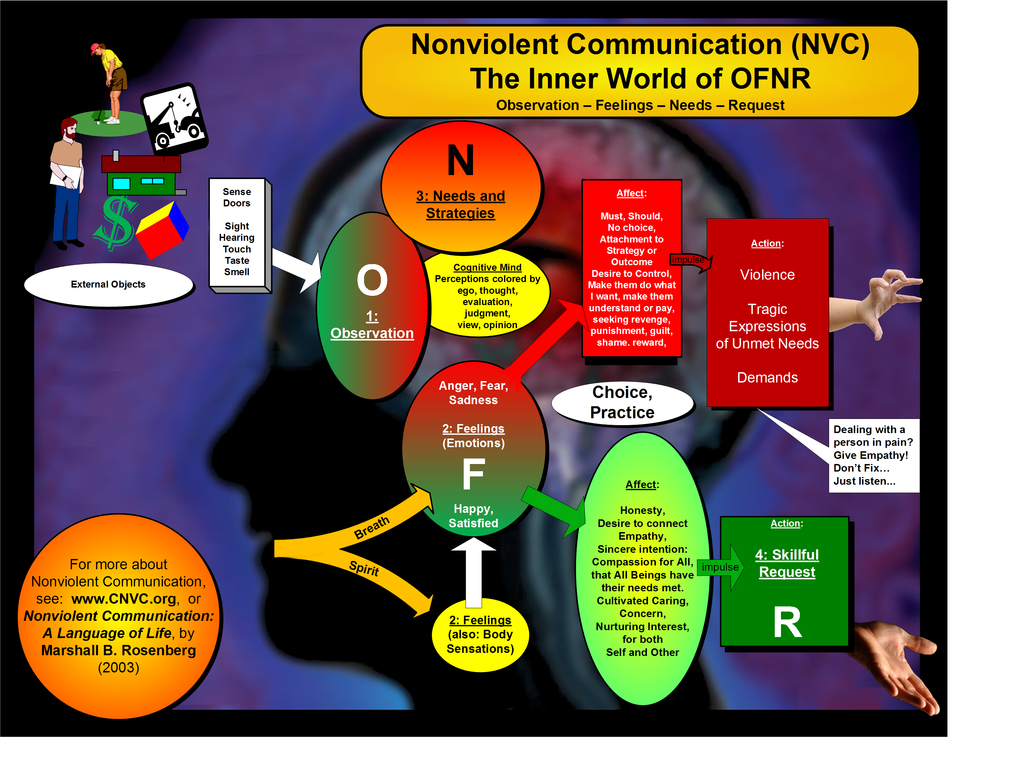

"1. Observation. When you begin to speak about something, it is important that the facts are clear. Say what you have seen or heard (what was said or done by someone). Try to be precise and avoid mixing in what you think about what you have seen or heard. Observation is a job for your senses, not for your thoughts. A way to detect whether thoughts are mixed in is if you think that what you have seen or heard is good or bad. Good and bad are judgments, and judgments are thoughts. If you have such ideas, then try to be even clearer in describing the observation.
2. Feeling. What do you feel about what you observe? What is the reality inside you? Bring your attention to your body and find the right word for the feeling. Sometimes it can take a while to find the word, and sometimes there are more feelings. If you sense that the word you have chosen speaks about the other person and not you alone, then it is likely that thoughts and judgments have sneaked in. Then wait until you find a word that only describes the reality inside yourself. There are many feelings words, however, they often come down to: happy, sad, afraid or angry. (for more, see: List of Feelings)
3. Need. What do you long for when you observe and feel like this? Or, if the feeling is happy, what need is fulfilled for you in this situation? The things that people need or long for are basically the same things, although often not at the same time. The needs repertoire is the same for all human beings. Needs are also limited in number to some 10 basic needs, for example, Individuality, Community, Rest, Contribution (for more, see List of Needs). When you can express what you need in a situation, it creates a strong point of understanding and contact between yourself and the other person. You will feel it as ‘coming to yourself’ and being true to yourself. When you feel the need in the body and find the right word, you will most likely feel a sense of relief.
4. Strategy. This is about what action you would like to happen in the situation where you observe this, feel this and need this. What action would meet your need? What would be the best thing to happen for you? Who would be the best person to do it, yourself or the other person, both maybe, or a third person? And when? When it is clear for you what action you want to choose, NVC suggests that you express it as a request. This will make it more likely that the person you ask, will do it. It is about giving them a free choice. If you sense that you somehow also make a demand, then come back to yourself and remind yourself that you can survive a ‘No’ and that the other person’s freedom is parallel to your own sense of freedom. There will be other ways or other people to help you."http://voice-by-voice.org/nonviolent-communication/
To end this brief Food for Thought here is a video that explains more about Non Violent Communication.

Have a good Sunday,

Yours
Adrian

Friday, October 13, 2017

Food for Thought: Future of Work; Student Empowerment and Digifam


Dear all,

Hope you have had a wonderful October Break and are refreshed and re-energized.

This weeks Food for Thought aligns very much with who we are as a school and the direction in which we are moving. Here are three interesting links to our mission;  jobs in the future, engagement to empowerment, and how smartphone make us less engaged.

Firstly, jobs in the future. This is a new TED Talk that gives further support to our school vision and mission. threads link with Sir Ken's writing in the Element and Daniel Pink's thinking in Drive. Great for showing any parent who questions why we are encouraging creativity and innovation rather memorization in our teaching.

"We've all heard that robots are going to take our jobs -- but what can we do about it? Innovation expert David Lee says that we should start designing jobs that unlock our hidden talents and passions -- the things we spend our weekends doing -- to keep us relevant in the age of robotics. "Start asking people what problems they're inspired to solve and what talents they want to bring to work," Lee says. "When you invite people to be more, they can amaze us with how much more they can be." 


Secondly, as you all know there are three key words in our mission statement, ENERGIZE, ENGAGE AND EMPOWER. As a school we are getting better at promoting inquiry and releasing learning to our students. Studio 5 is an excellent example of this process in action. This short video, 2 mins, focuses on the move from Engagement in our classrooms to Empowerment of our learners.


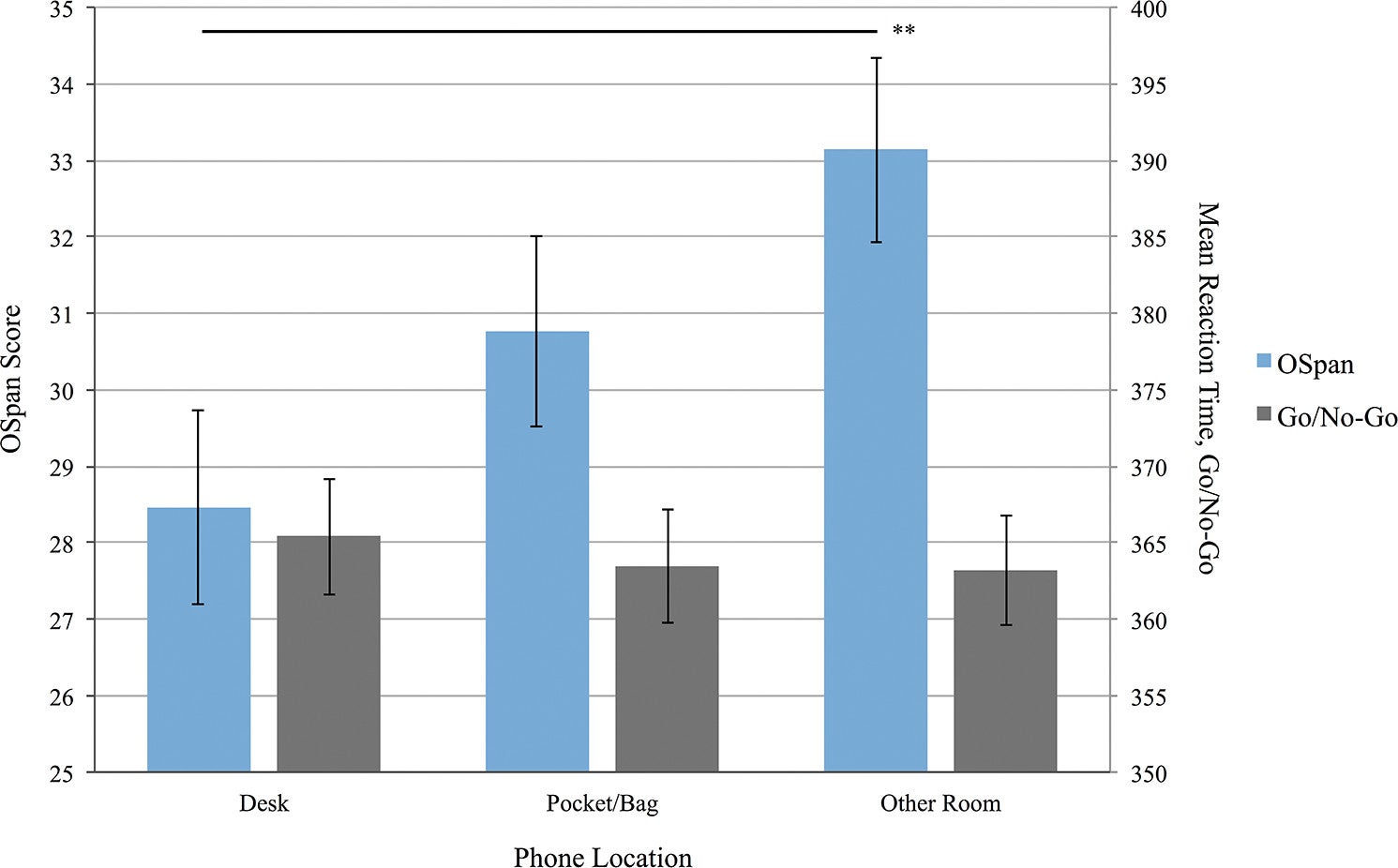
Thirdly, as a follow up to DigiFam I was sent an article that appeared in the Wall Street Journal, unfortunately as I am not a subscriber I was unable to read it. However, I did find other information related to the same research findings and wanted to share this with you. Here is a link to research from Chicago University, that suggests the Mere Presence of One’s Own Smartphone Reduces Available Cognitive Capacity. The conclusions are probably not a surprise to any of us in education but do provide evidence that we can use to support classroom and school control of smartphones and make us think about the most appropriate next moves regarding in school technology.

"Our smartphones enable—and encourage—constant connection to information, entertainment, and each other. They put the world at our fingertips, and rarely leave our sides. Although these devices have immense potential to improve welfare, their persistent presence may come at a cognitive cost. In this research, we test the “brain drain” hypothesis that the mere presence of one’s own smartphone may occupy limited-capacity cognitive resources, thereby leaving fewer resources available for other tasks and undercutting cognitive performance. Results from two experiments indicate that even when people are successful at maintaining sustained attention—as when avoiding the temptation to check their phones—the mere presence of these devices reduces available cognitive capacity. Moreover, these cognitive costs are highest for those highest in smartphone dependence. We conclude by discussing the practical implications of this smartphone-induced brain drain for consumer decision-making and consumer welfare."

"The results showed a surprisingly strong case for leaving your phone somewhere else when you want to perform well on a task. The two groups of participants who kept phones nearby either on a desk or in a bag showed lower working memory capacity (the ability to remember information temporarily) and a lower functional fluid intelligence (the ability to solve new problems and see patterns)."

Cognitive capacity increased the further removed participants were from their phones


The findings might be useful for how we use technology in our classrooms and control mobile usage at ISHCMC. It might explain why students are not paying as much attention to their work if the have their laptop open or phone on in class. The research findings clearly have implications for students and ourselves working at home with smart phones or other mobile devices nearby.

"The problem stems from your brain using a bit of your cognitive capacity to stay on track when you know your phone is right next to you, begging to be touched. It gets compounded when something like a notification gets your attention, causing you to think about what that notification (text messages from family, email from a boss) actually means, sending your brain on a tangent that distracts from your primary goal."

Linking to escaping from your smartphone there is a new 21 day meditation programme starting with Oprah and Deepak later this month. Finding 20 minutes in your busy day for some quiet time is very important for your well-being and happiness. This link will take you to the registration page if you would like to participate.

Have a great weekend,

Yours
Adrian


Sunday, October 1, 2017

Food for Thought: Measuring how our students are growing as learners.


Dear all,

This Food for Thought arises from discussions at the Asia Heads Conference and the Educational Advisory Board meeting, regarding the question, how do we know that students are learning? When you stop and think about it this is a justifiable question to be asking about school, that has as its primary goal, student learning. This question is notoriously hard to answer and provides the provocation for Tuesday afternoon's staff meeting. ( see below)

"Incredibly, you can walk into almost any school in America, go down the hall to the first couple of classrooms you find, look at the teachers inside, and realize this: nobody, not the principal, not the parents, not the students, not even the teachers themselves, actually knows how effective those teachers are in helping their students learn. They probably have an opinion, maybe even some anecdotal evidence. But in terms of accurate, verifiable information about how effective individual teachers are at helping each of their students learn and make progress from the beginning of the school year to the end? In the vast majority of schools, nobody knows."  -- Kevin Carey, EdTrust

What is emerging as we focus more and more on personalized learning and tracking of students is a move towards value added assessment. Of course this is not easy and firstly needs to be understood. Hattie attributes the largest effect on learning to the teacher or should it be teachers? This then begs the question how do we differentiate between teachers and should we? There is lots to discuss on this topic. This brings us back to Tuesday's meeting. This will be your opportunity to do some research and self inquiry and share your findings with other staff. These meetings are not scheduled to be part of CIS or IB accreditation but rather your chance to have time for pure educational discussion and debate with your peers. 

Hence the provocation for Tuesday 3rd October is; If we truly believe that character, skills and concept driven learning are essential for the future, how can we reliably demonstrate that our students are learning and that we as individual teachers are adding value to this learning?

As a background for your discussions I want to share a couple of things to get you started. Firstly, this long academic document about VAA.  Secondly, two relevant reads from Mindshift, What Character traits should we focus on and why, and Beyond  Academics, What a holistic approach to learning could look like. Of course you can find your own articles and do your own research. Please bring this with you on Tuesday to share with your group. At the end of Tuesday's session there will be the opportunity for tables to share their discussions and learn from each other.

Have a good Sunday,

Yours
Adrian

Sunday, September 24, 2017

Food For Thought: Words and the world we create around us

Dear all,

During the past week we have focused on a few important areas that can, and do, impact our lives. I found participating in Digifam to be both stress relieving and time creating. Certainly something that we should all consider building into our lives. Thursday was Peace Day an important concept that as a species we do not work particularly hard at maintaining preferring to only focus on it once conflict has started. And Friday was Gratitude day. Another very important word/ action/ emotion that can change the world. I hope that these are not just days that we celebrate but words that we can embed in our and our students lives that will make a difference. Hence, this weeks Food for Thought is written to encourage us to remember the importance of Choice Words as part of our Achievement Culture and the difference this can make.

I start this post with two short videos that create a feel good feeling. The first is an old video that I expect many of you will have seen, but that gives the message that just by changing the words we use we can have a very positive impact. This can be applied not only to our classroom but to our every day lives and relationships.


This second video demonstrates how a simple act of  expression can bring so much happiness and joy to those around us. Watch the faces of the young ladies as they read the words that their male counterparts have written about them. Wouldn't it be a wonderful world if everyone made it their job each day to make someone else smile and feel good about themselves?  Years ago I taught a lovely family from India who exuded a positive attitude on life no matter what was happening in their world. One day I was chatting and discovered that they were Jains. In our conversation I discovered that they started each day with the namaskara-mantra, that said: “I forgive all beings, may all beings forgive me. I have friendship toward all, malice toward none.”  For Jains this translates into kindness to all life.


Our use of choice words has to go far beyond just making students feel happy, although this is of course important. Today there is much written about how choice words associated with failure and how this can be turned from a negative scenario for the student to one which develops a growth mindset, resilience and even grit. In an age when our adolescents are suffering more and more mental stress and illness the development of such attributes in our students is important through the choice use of words. This link takes you to a good presentation produced by the counseling department at RMIT on Self Esteem and Resilience.

To add to this discussion I'd like to share this article from Mindshift, Instead of Framing ‘Failure’ As a Positive, Why Not Just Use Positive Words? This article is interesting because its authors demonstrate through their research that it is important for teachers to change their mindset regarding student work and attainment if they are going to successfully change the way they feedback and talk to students about failure.

"The importance of discovery methodologies and a positive approach to environment in educational sectors has an important and powerful ally: Finnish education scholar and theorist Yrjo Engestrom. In 1998, Engestrom worked with a middle school in a low-income area to help faculty reflect on their practices in an effort to create concrete mechanisms for change to better meet the needs of their student body, through a design research undertaking organized by the University of Helsinki’s Change Laboratory.
Engestrom and his colleagues coordinated a number of discussion sessions for staff and faculty at the school, providing no other objective than a space to talk constructively about daily teaching practices geared toward concrete mechanisms. The teachers’ ideas on what constituted ideal education outcomes differed with their daily practice, so they embarked on implementing a final project where each student would produce a concrete artifact to denote their learning. The project provided students with a capstone for their experience, and allowed the teachers an opportunity to document the learning journey."


Finally, I have added another short video that links with the Mindshift research about how our perceptions impact our of thinking and actions about events around us. Viewing this video from a school point of view it should encourage us to get to know our students and colleagues and their lives better if we are to avoid making judgments based on our own backgrounds and priorities.


Have a good Sunday,

Yours
Adrian

Sunday, September 17, 2017

Food for Thought: Teacher, who are we today?

Dear all,

It is obvious from the previous two posts that the role of the teacher needs to and is changing. We are no longer living in a world where the teachers role is to reinforce compliance and be the guardian of all knowledge in the classroom. This would be ridiculous in our world where knowledge is so freely available. Today's 5 year old will have been exposed to as much knowledge as their grandparents were by the time they were 20. Unless we dramatically move away from the idea of a teacher being primarily associated with knowledge our jobs could be under threat from AI.   So the big question that has to be asked is what is the role of a teacher working in the 21st century. This Food for Thought will NOT answer this question but I hope it will provoke reflection about who we are and what we need to be to maximize the potential of our students and prepare them for the future they will face.

The term teacher has been bothering me for a number of years because its root lies in the past when the "teacher" was mostly likely to be the main source of knowledge in the room. This is no longer the case as information/ knowledge is ubiquitous thanks to technology. The teachers role has become so multi faceted that it could be argued that maintaining the name is demeaning of the importance of this position in society today. Changing the name may help accelerate the change in perception and role of this important person in society. By using dynamic and exciting teaching methodologies, our students are drawn into the world of self actualization and realization of their aims, aspirations, dreams, goals and hopes. Collaboration, role play, data sharing, using the internet for research and reference should be normal in our classrooms. Hence, the role of the 'teacher' extends, at times, to beyond the classroom. Today a 'teacher' is a leader, a mentor, a role model, a counselor, a coach, a therapist, a seeker, a knowledge base, a disciplinarian, a data collector, a curriculum planner, an event manager and an entertainer among many other functions.

In their latest book, Bold Moves, Heidi Jacobs and Marie Alcock, take a look at the changing role and description of a teacher. they decide that future schools should be looking for people who demonstrate the following capacities to be working with students:


  • Teacher as self navigating and professional learner
  • Teacher as social contractor
  • Teacher as media critic, media maker, and publisher
  • Teacher as innovative designer
  • Teacher as globally connected citizen
  • Teacher as advocate for learner and learning

To see more detail about the about the above capacities please follow this link.

14541457963_43ebfc8ba9
Photo Credit: Ken Whytock Flickr via Compfight cc

Hence in this Food for Thought I have decided to provide a few provocations to make us thinker deeper about what our role may be in the future. This article is from Edutopia and through Project Based Learning points to our changing role as facilitator of learning.

"Deep learning is messy and complicated. My most fulfilling teaching days are filled with overlapping student voices, surprise, and opportunity. As I circulate around the room, I speak with young people who are grappling with challenges, generating and then revising ideas, and finding their way through the multiple stages of project creation. Depending on the day, my students may be sprawled out on the floor in groups, sitting individually and staring down their work on a screen, in quiet spaces editing video or audio, or out in the world interviewing, filming, or researching.
Project-based learning transforms the roles of students and teachers in ways that benefit all. This de-centering of the classroom and of knowledge helps students develop a sense of agency as learners and as people. If teachers maintain traditional notions of students as information recipients, teaching and learning become a pointless game where, instead of connection and engagement, the main challenge for students is to read the teacher's mind while producing a product in which they don't feel invested.
The Coalition of Essential Schools developed the metaphor of students as workers, with teachers as mentors or coaches. My time as a project-based teacher has helped me to examine this metaphor and expand upon it. Because my goal is to design learning that challenges students intellectually and creatively, I think of my students as creators, and I shift between multiple roles as I frame the learning, design inquiry-based units, help students generate ideas, provide models of work, consult with students, give feedback on rough work, and structure experiences so that there's an audience for student work.
In the interest of redefining the roles of students and teachers, I offer the following glimpses into aspects of teacher practice in successful PBL settings."
I am going to end with two TED talks from ordinary teachers talking about their experience in their modern day role. The first is by Joe Ruhl a Science teacher of over 37 years who stresses the importance of the modern skills of collaboration, communication, critical thinking, creativity and caring that he believes should be present in all classrooms. Mr Ruhl is nearing retirement, has won numerous teaching awards and has clearly not been scared to adapt his teaching techniques to engage his students of the 21st century.


Finally, an English teacher who found a more radically new lease of life as a teacher in her school North Carolina. There is not only great learning and being a life long learner to be had from this talk, but also role modelling how teaching can go beyond the classroom and energize students to make a difference in their community. It is interesting that "her career turning point came when her students became her teachers, challenging her to live up to her potential and to push past her fears." This talk raises the fascinating question of where does our modern role of learning facilitator actually stop? As Heidi Hayes Jacobs talks about in her book, there needs to be a redefinition of the roles of both teachers and students, how they interact and how the systems ans policies we have in place support these changing needs.


Hope you have enjoyed this trilogy of Food for Thoughts.

Have a good Sunday,

Yours
Adrian

Sunday, September 10, 2017

Food for Thought: The skills we might be scope and sequencing

Dear all,

I have to admit I was glad that last week was only a three day week.

As promised I want to use this weeks Food For Thought to further develop our thinking about the skills that we need to be embedding in our teaching and curriculum so that we are truly a school preparing our students for the future not the past. I believe that we need to readjust the focus of our teaching and curricular to truly reflect the explicit preparations of students for a world dominated by artificial intelligence. Wherever you turn these days there is more and more evidence that this world is not future science fiction it is already upon us. We already have driver less cars and trucks, robot run resource centers and libraries and of course increasingly smart appliances for our homes.

So we need to be thinking about which are the skills that we need to build into an ISHCMC education. Of course we can start with the the IB's AtL skills.

Image result for ib atl skills list

This was further developed and expanded by Suzanne and Billy in their workshop at the 3E conference which I am sure they will not mind me sharing with you here. This adaptation of the AtL's breaks them down into groups and provides details about each one. It is very useful for all of us as AtL's are supposed to be embedded and scope and sequenced across all of our IB programmes.


These three short video extracts should also encourage skills thinking beyond the IB with a focus on future skills. Apologies if the quality of the video is not good but Blogger only allows 10 MB and although short these clips exceeded that limit. The first is Tony Wagner, from Harvard who wrote the book, Most Likely to Succeed and produced the documentary of the same title. 


The second extract is taken from Seth Godin's talk Stop Stealing Dreams. The first video is the extract but if you are interested I have included the entire video in case you have not watched it. Seth Godin is asking the question, What is School for? and hence challenging the skills that school's should be giving students.


The discussion about valuing skills and talents would not be complete without an extract from Sir Ken Robinson. We have heard his words for years now about creativity but when one looks at the on coming age of AI the place for creative people becomes ever more important. There may well be machines that can learn, solve problems and are more intelligent that humans but will they be able to entertain us. we are on the edge of the 4th Technological Revolution. If we go back to the numbers 2 and three will will note that both increased leisure time and our propensity to enjoy music and other creative activities. The 4th Revolution will certainly transform the world of work, provide ecah and everyone in society with more time and consequently provide the opportunity for those who can entertain and provide recreational activities to excel.


Finally I would like to share this info graphic to add to your thinking about skills and what shape our curricular should be taking.

Important Work Skills for 2020
Source: Top10OnlineColleges.org

Here is an additional link that has just been sent to me about Jobs of the Future from Big Think , it is short and the last minute further reinforces the sorts of skill we need to be prioritizing.

There is so much to be thinking about in education today...it is so exciting.

Have a wonderful afternoon,

Yours
Adrian

Monday, September 4, 2017

Food for Thought: Challenge from the 3E's conference

Dear all,

What a wonderful two days of professional development! There is no way that you could have attended these two days and not learned something about teaching or yourself and taken another step towards mastering our profession. A huge thanks to our external consultants, Lana, Jason, Dominic and Malcolm; to all our in-house talent who shared their passion and expertise for empowering the learning at ISHCMC and to those members of our community who certainly inspired us with their talks . It takes a lot of work on top of ones normal work to arrange an event over two days that runs so smoothly and involves so many people so a huge thanks most also go to the primary SLT and their committee of teachers who ensured the success of this conference. I thought the atmosphere was amazing throughout the two days and the buzz created from our professional learning could be heard around the region.

This post will be the first of three parts which will provide Food for Thought as we develop a skills scope and sequence across ISHCMC. The first part will focus on how naturally our mission, vision and the 3E conference fits with Student Centered Learning. The second and third parts will look at the skills we might want to be considering and the definition/ job role of a teacher in a student centered skills based curriculum. Lots to think about arising from our conference.

One of the key areas we are focusing on for growth this year is inquiry across the whole school and the development of techniques that encourage students to ask and search for the answers to big questions that are relevant to their learning. The majority of you would have had a session with Jason, the Philosophy Man, from P4C. In his opening address Sir Kevan Collins referred to work undertaken by the Education Endowment Foundation on the impact of P4C on learning. I do suggest that you take some time to visit this site and take a look at some of the reports that are relevant to your teaching as they will certainly, like the work of Hattie, show you what might or might not work in your classroom.  Here is the link to the executive summary report on P4C showing its impact on learning.

Whilst visiting and listening to conversations about the workshops there was certainly a huge connection between empowerment, skills and appropriate teaching for Generation Z students. A large amount of what was being discussed throughout the two days supports our mission and in particular pedagogy that creates a student centered learning environment. This short video provides reinforcement of many of the principles enshrined in our mission and vision at ISHCMC. If you listen carefully you will note the emphasis on constructivism, inquiry, learning that is relevant to student lives, a personalized approach and the deliberate development of learning skills.


The approach to teaching and learning that we are developing is also one that Cognita intends to develop through the Cognita Way and the work of the Educational Advisory Board. It is clear that changing our focus from content to skills and concepts is the right direction for future learners. But as Sir Kevan pointed out we do have an obligation to ensure we are collecting data on the impact of our work on the learning of our students. By doing this we can contribute to the greater educational debate, helping other schools to make the changes that they know must be made for the future well-being of students. It would be negligent of us not to have evidence that our students are better equipped for the future than they would have been had we continued to focus purely on content and examinations. This will not be an easy task but is a challenge that I believe we should take on board as a school. Here is the report from the  work undertaken by the EEF on the impact of meta-cognition and self-regulation. This comes under the section on Character that covers many other interesting topics such as peer tutoring, P4C, healthy minds etc.

Part 2 will focus on the skills that we think students might need for their future.


Wishing you a relaxing long weekend,

Yours
Adrian


Follow on from last week:

“There are more things … likely to frighten us than there are to crush us; we suffer more often in imagination than in reality.” Seneca


As a follow up to last week's Food for Thought about stoicism and a philosophy to enshrine the empowerment of our students I thought that some of you might be interested in this article from Brain Pickings. The focus of this article is Seneca's thinking about anxiety and his antidote to this way of being.