Friday, December 19, 2014

Last Food for Thought for 2014

Dear all,

Thank you for a fantastic semester and a real buzz around the School. I think that we are really walking the talk with our mission, and by doing so creating a wonderful learning environment for our students. It has been the best part of my day walking around the school and observing you teaching. Now you all deserve a fun and relaxing vacation.

I promise I will not be bombarding you with Food for Thoughts over the vacation, just best wishes for the festive season and a Happy and Healthy 2015. I thought that sharing this piece of research on the “importance of giving hugs” fits very well with the festive season, the culture we are trying to build at ISHCMC and is a reminder of our need as humans for closeness and attention.

Amanda Richards via Compfight cc
11437678555_3658774020

You Might Be Surprised How Much a Hug Helps Fight Illness, Stress and Depression


Psychologists go to surprising lengths in new study to show how much a hug can help. Being hugged reduces the deleterious effects of stress on the body, according to new research which intentionally exposed people to a cold virus. Hugging acts as a form of social support and protects people from getting sick and even reduces their illness symptoms if they do get sick.

The study, published in the journal Psychological Science, asked 404 healthy adults how much social support they perceived they had from other people (Cohen et al., 2014).
They were also asked about how often they were hugged and how often they came into conflict with others.
Participants were then exposed to a cold virus in the lab (they were well paid for this: $1,000 each).
Their condition was monitored in quarantine to see if they developed a cold and how severe their symptoms were.

Professor Sheldon Cohen, who led the study, explained its rationale:
“We know that people experiencing ongoing conflicts with others are less able to fight off cold viruses.
We also know that people who report having social support are partly protected from the effects of stress on psychological states, such as depression and anxiety.
We tested whether perceptions of social support are equally effective in protecting us from stress-induced susceptibility to infection and also whether receiving hugs might partially account for those feelings of support and themselves protect a person against infection.”

The results showed that people who were hugged more often or who perceived they had greater social support were less likely to catch the cold in the first place. Those who did get a cold had less severe symptoms if they were hugged more and felt supported socially.
Professor Cohen said:
“This suggests that being hugged by a trusted person may act as an effective means of conveying support and that increasing the frequency of hugs might be an effective means of reducing the deleterious effects of stress.
The apparent protective effect of hugs may be attributable to the physical contact itself or to hugging being a behavioral indicator of support and intimacy.
Either way, those who receive more hugs are somewhat more protected from infection.”


And here is a short video about giving hugs:


Have a great vacation,

Yours

Adrian

Sunday, December 14, 2014

Food for Thought: What makes us happy?


Dear all,

Firstly, thank you for Thursday’s Celebration of Pedagogy. It was an excellent snapshot of the fantastic activities and ideas that you are sharing with your students. I hope that you found it useful and that it enabled you to think about additional ideas for your own classroom.


This week’s Food for Thought is focused on the word happiness. We are about to break for the winter vacation and will be wishing each other, our friends and families a Happy Christmas and a Happy New Year. It sounds wonderful but what is happiness? What does it mean to be happy? How do we achieve happiness? Researching this topic, along with positivism, it becomes clear that happiness which we all seek and wish for, is far more difficult to attain than one might at first imagine. Hence the question, how happy are you and what are you doing about being happier in your life?

These two TED’s will not provide an absolute answer to these questions but they might make you think and have an impact on your new year resolution.

#1 When are humans most happy? To gather data on this question, Matt Killingsworth built an app, Track Your Happiness, that let people report their feelings in real time. Among the surprising results: We're often happiest when we're lost in the moment. And the flip side: The more our mind wanders, the less happy we can be. (Filmed at TEDxCambridge.)


#2 What is happiness, and how can we all get some? Buddhist monk, photographer and author Matthieu Ricard has devoted his life to these questions, and his answer is influenced by his faith as well as by his scientific turn of mind: We can train our minds in habits of happiness. Interwoven with his talk are stunning photographs of the Himalayas and of his spiritual community.


Thank you for all your hard work that has contributed towards a wonderful semester.

Wishing you a Happy Christmas and a Happy and Healthy New Year,

Yours
Adrian

Before I sign off for 2014 I’d just like to share this very short video that could be used in any class as a provocation for discussing privilege and opportunity.


Sunday, November 30, 2014

Food for Thought: About Mindfulness

Dear all,

I actually posted this week’s Food for thought last weekend but decided not to over burden you with information. There are two parts to this week’s post, the first is 8 ways to teach Mindfulness and the second is a voice thread that talks about how Mindfulness can help your teaching. Certainly lots of interesting information in both articles. It is becoming more and more obvious that introducing Mindfulness at ISHCMC was a very sound thing to do as it both empowers and prepares our students for their futures. As was mentioned in the Art of Stillness, leading corporations are today following a mindful approach to business and employing people who are mindful in their approach to work and life.

I’d also like to share this additional short article about Mindfulness and colouring: https://psychologies.co.uk/why-adults-are-going-back-colouring-books as it might help some of us find a few focused minutes in our busy days. As the article about teaching Mindfulness begins the first step is to develop your own practices.

Have a good weekend,

Yours
Adrian


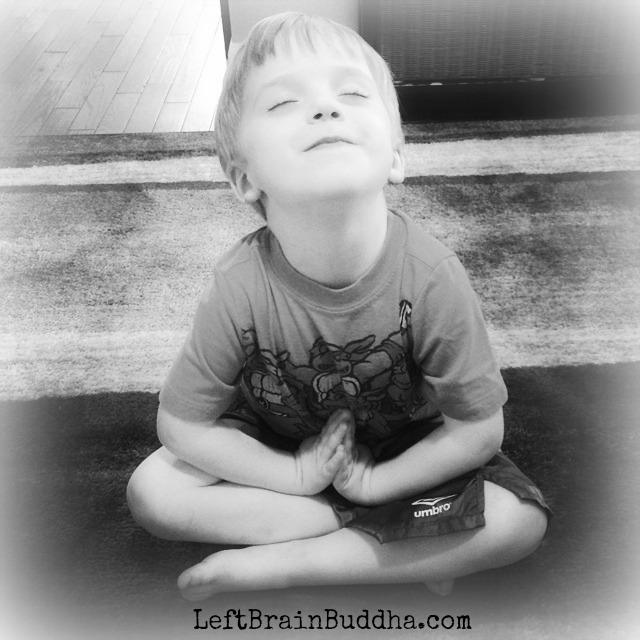
2014-07-23-childmeditating2.jpg.jpg

8 Ways to Teach Mindfulness

We know mindfulness is good for us. Mindfulness allows us to be present in our parenting, choosing a skillful response, instead of succumbing to our visceral reactions.
Mindfulness is also good for our kids. There is an emerging body of research that indicates mindfulness can help children improve their abilities to pay attention, to calm down when they are upset and to make better decisions. In short, it helps with emotional regulation and cognitive focus. Do I even need to ask if you want that for your kids?
So where do we start? How can we teach these important skills to our children?
First things first...
Establish your own practice. You would have trouble teaching your children ballet if you had never danced. To authentically teach mindfulness to your children, you need to practice it yourself. You can start slowly with a meditation practice of just five to 10 minutes a day. Find ways to incorporate mindfulness into your daily activities. Don't let this step intimidate you -- you're probably practicing a lot of mindful habits already!
Keep it simple. Mindfulness is a big word for young kids to understand. Put simply, mindfulness is awareness. It is noticing our thoughts, feelings, bodily sensations, and anything that is around us and happening right now.
Check your expectations. Are you expecting mindfulness to eliminate tantrums? to make your active child calm? to make your house quiet? If so, you are likely to be disappointed. While feeling calm or being quiet are nice side-effects of mindfulness, they are not the ultimate purpose.
The purpose of teaching mindfulness to our children is to give them skills to develop their awareness of their inner and outer experiences, to recognize their thoughts as "just thoughts," to understand how emotions manifest in their bodies, to recognize when their attention has wandered, and to provide tools for impulse control. It is not a panacea, and it will not completely get rid of what is, frankly, normal kid behavior, like tantrums and loudness and whining and exuberance and arguing...
Don't force it. If your kids aren't interested in your lesson or activity, drop it. This is a good time for you to practice non-attachment to outcomes!
Now that we've got the preliminaries out of the way, here are some suggestions for how you can begin to introduce mindfulness to your children:
1. Listen to the bell. An easy way for children to practice mindfulness is to focus on paying attention to what they can hear. You can use a singing bowl, a bell, a set of chimes or a phone app that has sounds on it. Tell your children that you will make the sound, and they should listen carefully until they can no longer hear the sound (which is usually 30 seconds to a minute).
2. Practice with a breathing buddy. For young children, an instruction to simply "pay attention to the breath" can be hard to follow. In this Edutopia video, Daniel Goleman describes a 2nd-grade classroom that does a "breathing buddy" exercise: Each student grabs a stuffed animal, and then lies down on their back with their buddy on their belly. They focus their attention on the rise and fall of the stuffed animal as they breathe in and out.
3. Make your walks mindful. One of my children's favorite things to do in the summer is a "noticing walk." We stroll through our neighborhood and notice things we haven't seen before. We'll designate one minute of the walk where we are completely silent and simply pay attention to all the sounds we can hear -- frogs, woodpeckers, a lawnmower. We don't even call it "mindfulness," but that's what it is.
4. Establish a gratitude practice. I believe gratitude is a fundamental component of mindfulness, teaching our children to appreciate the abundance in their lives, as opposed to focusing on all the toys and goodies that they crave. My family does this at dinner when we each share one thing we are thankful for. It is one of my favorite parts of the day.
5. Try the SpiderMan meditation! My 5-year-old son is in to all things superheroes, and this SpiderMan meditation is right up his alley. This meditation teaches children to activate their "spidey-senses" and their ability to focus on all they can smell, taste, and hear in the present moment. Such a clever idea!
6. Check your personal weather report. In Sitting Still Like a Frog, Eline Snel encourages children to "summon the weather report that best describes [their] feelings at the moment." Sunny, rainy, stormy, calm, windy, tsunami? This activity allows children to observe their present state without overly identifying with their emotions. They can't change the weather outside, and we can't change our emotions or feelings either. All we can change is how we relate to them. As Snel describes it, children can recognize, "I am not the downpour, but I notice that it is raining; I am not a scaredy-cat, but I realize that sometimes I have this big scared feeling somewhere near my throat."
7. Make a Mind Jar. A mind jar is a bit like a snow globe - shake it up and watch the storm! But soon, if we sit and breathe and simply watch the disturbance, it settles. As do our minds.
8. Practice mindful eating. The exercise of mindfully eating a raisin or a piece of chocolate is a staple of mindfulness education, and is a great activity for kids. You can find a script for a seven-minute mindful eating exercise for children here.
Above all, remember to have fun and keep it simple. You can provide your children with many opportunities to add helpful practices to their toolkit -- some of them will work for them and some won't. But it's fun to experiment!
http://www.huffingtonpost.com/sarah-rudell-beach-/8-ways-to-teach-mindfulness-to-kids_b_5611721.html?utm_hp_ref=tw

How Mindfulness Could Benefit Your Teaching Practice

"Some schools are building mindfulness programs into their curriculum as part of the effort to build social and emotional skills in addition to academic ones. Studies of mindfulness practice show that when kids focus on what they are feeling at a given moment in time they increase the functioning of the prefrontal cortex, the part of the brain that controls executive functioning and self-regulation. While all kids live in an increasingly distracting world and could benefit from training how to focus, teachers in low-income schools have found that these kinds of programs are particularly helpful for kids struggling with trauma in their daily lives.
Chris McKenna describes his work at Mindful Schools in this audio interview on PAGATIM. For those looking to learn a little more about how mindfulness could benefit teachers and students, it’s worth a listen."


http://blogs.kqed.org/mindshift/2014/11/take-a-listen-how-mindfulness-could-benefit-your-teaching-practice/?utm_source=feedburner&utm_medium=email&utm_campaign=Feed%3A+kqed%2FnHAK+%28MindShift%29


Saturday, November 29, 2014

Food for Thought: The Art of Stillness

Dear all,

I realize we are in that hectic phase that accompanies the end of the first semester; school productions, sports tournaments, school reports, decisions about contracts, summative assessments, social events, holiday planning etc. And I know a lot of you are quite tired as we enter these last few weeks of the semester, so this week's food for thought is designed to encourage you to take some quiet time to think about our priorities in life. Even if it is only the 15 minutes it will take to watch this video then you will have some peace and stillness. Pico Iyer raises some interesting questions for us all in this TED talk that relate strongly to our mindfulness and energizing ourselves.

Here is a link to a very short TED book that was written to accompany the Ted Talk. I have attached the pdf of this book to the email I sent to notify you about this post.


Have a good weekend,

Yours
Adrian


Sunday, November 23, 2014

The MindShift Guide to Digital Games and Learning


The MindShift Guide to Digital Games and Learning

How can games unlock a rich world of learning? This is the big question at the heart of the growing games and learning movement that’s gaining momentum in education. The MindShift Guide to Digital Games and Learning [PDF] explains key ideas in game-based learning, pedagogy, implementation, and assessment. This guide makes sense of the available research and provides suggestions for practical use.
The MindShift Guide to Digital Games and Learning started as a series of blog posts written by Jordan Shapiro with support from the Joan Ganz Cooney Center at Sesame Workshop and theGames and Learning Publishing Council. We’ve brought together what we felt would be the most relevant highlights of Jordan’s reporting to create a dynamic, in-depth guide that answers many of the most pressing questions that educators, parents, and life-long learners have raised around using digital games for learning. While we had educators in mind when developing this guide, any lifelong learner can use it to develop a sense of how to navigate the games space in an informed and meaningful way.
MindShift-Guide-to-Digital-Games-and-Learning-Cover
Here’s a preview of the table of contents:
Introduction: Getting in the Game (Page 4)
An overview of games in the classroom from Katie Salen Tekinbaş, executive director of the Institute of Play.
What the Research Says About Gaming and Screen Time (Page 6)
Much of the research around digital games and screen time is evolving. Pediatricians, academics, educators, and researchers are working to find answers to how games and technology affect learners of all ages.
How to Start Using Digital Games for Learning (Page 14)
Since each learning environment is unique, here are some steps to assessing your resources before committing to a particular game or platform. See how some educators are using digital games in the classroom and how they find support.
How to Choose a Digital Learning Game (Page 19)
The sheer volume of games classified as educational can be overwhelming. This section gives you a starting point for game selection by providing an understanding of the types of games available in the marketplace and how to go about selecting them.
Overcoming Obstacles for Using Digital Games in the Classroom (Page 27)
As game use in the classroom continues to grow, barriers to deployment also need to be addressed. A recent survey of teachers outlines exactly which obstacles get in the way of successful implementation; solutions to those concerns are outlined in this section.
How Teachers Are Using Games in the Classroom (Page 30)
Examples of how teachers use games are embedded throughout the guide (including video examples), but this section takes an in-depth look at how some teachers are using games in the classroom and their real-life struggles and victories.

Sunday, November 16, 2014

Food for Thought: Follow up on effect of Pornography


Dear all,

I thought that you might be interested in following on your thinking from Thursday morning's session with Robyn. I believe that it is important to be engaging this topic, because as you saw in the statistics on pornography, it is one of the fastest growing industries and it is, and will, further impact society, relationships and the way males and females see each other because of the pervasive manner in which it is becoming embedded in the media. Following Robyn's talk, whilst chatting the question was raised, how can we talk to students when most of us have never talked about this with our partners or other adults? Well, hopefully these three TED's will help to make you feel more comfortable, and as Ran Gavrieli concludes encourage you to start those conversations.

This 5 minute TED talk by Philip Zimbardo, The Demise of Guys was the first that I watched several years ago, when I was doing some research about why boys appear to be failing both in school and society these days. It was the first time that I had heard about the impact of pornography and the internet on this trend. Made in 2011 Zimbardo shares worrying statistics about boys and suggests a few reasons for this, including pornography and the internet.


http://www.ted.com/talks/zimchallenge

This second TEDX talk, 17 minutes, is one I watched in 2012 as a follow up to the Demise of Guys. It is by Gary Wilson and it goes through the research that was behind Zimbardo's conclusions and explains what happens in the brains of boys and men who constantly watch and become addicted to porn. This talk certainly illustrates why school's and teachers need to be at least talking about porn on the internet and engaging our students in these discussions. As well as being worrying it does provide hope as well.


http://www.ted.com/search?cat=talks&per_page=12&q=Gary+Wilson

This final TED X talk, Why I stopped watching porn, that I want to include was shared with me following Robyn's talk on Thursday. It is a very personal talk that brings much of the previous TED's together and provides a sensitive level of understanding. It is by Ran Gavrieli who studies gender at Tel Aviv University. Ran writes and lectures about emotional and physical safe sex; porn and porn-influenced cultural damages; gender and power relations; and sex and intimacy. He works with youth and adults all over Israel in sex and gender studies and in building positive self image in a world inundated by sexual imagery with negative connotations. His conclusion that we need to talk about this topic holds great resonance with Robyn's week in ISHCMC.


https://www.youtube.com/watch?v=gRJ_QfP2mhU

Have a good Sunday,

Yours
Adrian

Sunday, November 9, 2014

Food for Thought: Focus on Digital Standards

zenobia_joy via Compfight cc
5393909520_6e5da62125
Dear all,

As you all know Robyn Trevyaud is at ISHCMC next week informing our community about the challenges of Digital Citizenship and Literacy and helping us start to create a Digital literacy and Citizenship Policy. 

Hence this week's food for thought is simply to request that you go to the site of  the International Society for Technology in Education, http://www.iste.org/  and browse for 30 minutes through the information provide. There is lots of information that you can think about and use in your classrooms.

Linking directly with what Robyn will be helping us start are the ISTE Standards http://www.iste.org/standards  

"Why are standards important?
Technology has forever changed not only what we need to learn, but the way we learn.
The ISTE Standards set the bar for excellence and best practices in learning, teaching and leading with technology in education. The benefits of using the ISTE Standards include:
  • Improving higher-order thinking skills, such as problem solving, critical thinking and creativity
  • Preparing students for their future in a competitive global job market
  • Designing student-centered, project-based and online learning environments
  • Guiding systemic change in our schools to create digital places of learning
  • Inspiring digital age professional models for working, collaborating and decision making

Have a good Sunday,
Yours
Adrian