Friday, August 26, 2016

Food for Thought: Who are you?


Dear all,

There is so much that I want to share with you but don't want to overburden you, hence I decided to complete the post on a Friday so as to give you time to browse over the weekend. This week's Food for Thought has several parts and an additional provocation, that in their way build on the work we started in our Tuesday meeting. Our goal last Tuesday was to help you take time to explore which of the positive emotions are strong for you and which need building up. We believe that this exercise will benefit all of us in the long run.  

The first two parts of this weeks Food for Thought relate very much to our year long inquiry, Who are we? The first is a series of thoughts from the philosopher Alan Watts, not a relative, who encourages us all to reflect upon how we are living our lives and subtly asks, are making the most of your time?


The second part is a meditation that deepens our understanding of who you are and can be undertaken with your partner or close friend. It is designed to help you gradually move away from self obsession towards being able accept and appreciate others. It is believed that until you are able to understand your own selfishness you will not be able to cultivate kindness.

"The only way to maintain that connection is to extend our awareness to include all of our experience, not just the parts that we find comfortable. Meditation practice is a good way to begin because it is a process of becoming aware of whatever comes up in our mind, both good and bad, painful and pleasurable. We are learning to be open to who we are, and whatever we are experiencing. So meditation practice is not just a mental exercise; it is a way of making friends with ourselves at a very basic level. Step by step we are learning more about ourselves and accepting and integrating those parts of ourselves we had rejected.
This exercise takes two people. To begin, sit quietly together, either next to one another or facing one another. Take some time to settle your mind, placing your attention lightly on the breath. Do not rush, but allow enough time to settle and to be at ease simply sitting together in proximity.
The next step is to consciously include your partner in your practice. As you breathe out, extend your attention out to her and as you breathe in consciously include her in your awareness. Be as straightforward here as possible. You are not analyzing your partner’s state of mind or trying to figure her out, but simply being aware of her presence.
Finally, pay attention to the space between you and your partner and your connection to one another. Into that mutual space, as you breathe out, project a quality of acceptance and simple friendship to your partner. On the in-breath, take in and receive the acceptance and friendship that your partner is extending to you. Feel the energy of acceptance and friendship circulate between the two of you.
To conclude, spend a few minutes simply sitting together quietly.
When we sit quietly like this with another person, we gradually become more aware of that person’s presence. We begin to accept and appreciate her or him. Those two qualities, awareness and acceptance, are the ground of kindness. But we keep getting absorbed with ourselves, and losing our awareness of others. When we are caught up in our own concerns, our appreciation and awareness vanish. They completely disappear—poof!
We might prefer to ignore our tendency to focus on our own concerns and ignore the concerns of others. However, if we want to cultivate kindness, we first need to understand our own selfishness. That is where we begin. We need to stop and take a good look at this fixation with ourselves."
http://www.lionsroar.com/kindness-to-ourselves-and-others/?utm_source=Lion%27s+Roar+Newsletter&utm_campaign=c2826ddd7f-LR_Weekend_Read_August_19_20168_10_2016&utm_medium=email&utm_term=0_1988ee44b2-c2826ddd7f-21844437&goal=0_1988ee44b2-c2826ddd7f-21844437&mc_cid=c2826ddd7f&mc_eid=fc6b2aaa9c


Finally, here is one extra piece of research that further supports what we feel is right in the way we are approaching student learning at ISHCMC. If you don't want to read the book the rest of this post from Psychology Today, will certainly give you research based reasoning if a parent ever questions your pedagogy. Here is a brief extract from the post.
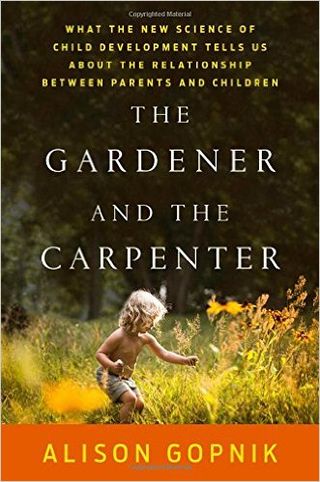

Farrer, Straus & Giroux
"Alison Gopnik is a renowned developmental psychologist whose research has revealed much about the amazing learning and reasoning capacities of young children, and she may be the leading interpreter of such research to the general public.  She is one of the best science writers I know of.  In her most recent book, The Gardener and the Carpenter, released just a few days ago, she describes the results of many clever experiments that help us understand how young children learn by watching others, listening to others, and manipulating objects in systematic ways in their play. 
A persistent theme emerging from such research, as Gopnik explains, is that children learn not by passively absorbing information, but by actively engaging their social and physical environments and drawing logical inferences based on what they see, hear, and in other ways experience.  Gopnik contends that children learn a great deal from other people, including from their parents, not because the others are deliberately teaching them but because those others are doing and talking about interesting things, which children are innately motivated to try to understand and incorporate into their own growing world views."
Have a great weekend,
Yours
Adrian
Here is an additional provocation to think about as we think about who we are. We do not exist in isolation but in a fast changing world that is not the same for all, and impacts each one of us differently. This TED by writer Anand Giridharadas is a letter from one citizen to another. It's from one who has won in this era of change, to others who have, or feel, lost.It asks us to think deeply about the world that we are creating for ourselves and future generations and to find ways to understand each other before there is anger and blood. It outlines many of the challenges that our students will face in this changed world. In our search for who we are, I believe we cannot ignore the world beyond HCMC, and that we need to reflect upon where we stand, and from there be able to create a school that is built around a collective vision for the future.


Saturday, August 20, 2016

Food for Thought: How We See Ourselves


Dear all,

Firstly, a big thanks to everyone who attended the 'Back to School Party' on Friday evening and helped to make it such a fabulous evening. Thanks to the school band, Get Staffed, for their lively entertainment that helped cement the increasing feeling that we are all part of one good school.

This week's Food For Thought I hope builds on the atmosphere and ambiance that was present at the party and is designed to continue our thinking about who we are. This first video is a short poem about saying yes, and instead of finding reasons for not doing something changing our mindset to taking on new challenges and adventures.


The second link is to a website,  Gratitude Revealed that has a portfolio of wonderful short videos that will make you think about key areas in your lives. Take your time to watch each of the different sections because they will certainly make you think about who you are and where you stand regarding each area. When I watched these videos I felt even more grateful for the life that I have and enjoy everyday. I hope that you will be similarly inspired and that you will be able to use this material to encourage your students to see how fortunate they are and how they can share their fortune with others around them. We all live in a beautiful world, full of amazing stories and potential, of opportunities to make the most of what we have been given no matter how big or small, in the end it is up to each one of us to make the most of our time. Of course this is far easier to achieve if we have a positive default, open mind and willingness to embrace life.


Have a great weekend,

Yours
Adrian


Sunday, August 14, 2016

Food for Thought: Inquiry based learning in our classrooms


Dear all,

Thanks for the great start to the school year. I hope that you all had a good week. I know that the students did.

One of our key professional development areas for this year is to ensure we improve our understanding of inquiry based teaching. You may ask why would we do this when many of you are already quite proficient at this pedagogy. There are several reasons for this. Firstly, as a key goal this year we are inquiring into who we are across the whole school. If we aren't proficient in encouraging students to inquire they won't be able to seriously explore the question who am I?  and emerge with any meaningful discoveries. Secondly,  there are many different interpretations across a EE to 12 school of what inquiry means and these aren't always maximizing the potential of this pedagogy. Thirdly, inquiry is the expected pedagogy for all three IB programmes. Lastly, all the readings point to the fact that inquiry based learning feeds perfectly to our mission by energizing, engaging and empowering students to achieve more meaningful and deeper understandings through their learning.

By focusing on inquiry we should all be releasing more of the learning to students. Of course this does not mean that as teachers we do not teach anymore but what does change is our role in the classroom. No longer are we the fountains of all knowledge, but rather we have to think of provocation that will engage students and make them curious about their learning so they ask challenging questions and are motivated to explore their curriculum.
Each section of the school will be watching a series of videos on inquiry based learning and then discussing and applying their learning as the year progresses. Hence, I thought it important that this week's Food for Thought focuses on inquiry based learning with a series of short blog posts, videos and articles.

So,

What is Inquiry based learning?

"Inquiry-based learning is more than asking a student what he or she wants to know. It’s about triggering curiosity. And activating a student’s curiosity is, I would argue, a far more important and complex goal than the objective of mere information delivery.

Nevertheless, despite its complexity, inquiry-based learning can be somehow easier on teachers, too. True, it’s seemingly easier because it transfers some responsibilities from teachers to students, but it’s really easier because releasing authority engages students.Teachers who use inquiry-based learning combat the “dunno” -- a chronic problem in student engagement.
Let’s face it, when you ask a student something like, “What do you want to know about _______?” you are often met with a shrug, or a, “dunno.” Inquiry-based learning, if front-loaded well, generates such excitement in students that neurons begin to fire, curiosity is triggered, and students can’t wait to become experts in answering their own questions."

Here is a TED talk given by Kath Murdoch, one of the worlds leading inquiry consultants around the world. In this talk Kath encourages teachers to maintain wonder in our students. This talk is from 2014 but certainly useful for those still grappling with why we would want to encourage inquiry. This is supported by a 6 minutes video that clearly articulates why we should be using inquiry in all our classrooms.


What are the benefits of bringing inquiry based learning to all our classrooms?


Finally for this post here are 10 tips for bringing inquiry to your classrooms. If you want to read more about each then please follow the link to the full article.

10 Tips For Launching An Inquiry-Based Classroom


1. Don’t teach the content standards; help kids find their own path towards the information they need to know.
2. Don’t tell students what they should know; create the structure for them to experience it on their own.
3. Use class time to make connections between pieces of information.
4. Many kids struggle with reading, so hook them with the non-written word.
5. Stop giving struggling kids the most boring version of the work to repeat over and over again.
6. Surprise students.
7. The traditional model of imparting knowledge isn’t working very well, so don’t be afraid to try out inquiry.
8. Find the “bend” in the outcomes and abandon the prescriptive path.
9. Indulge interesting student questions even if it doesn’t fit the pacing guide.
10. Approach the practice of teaching with inquiry and use that meta-practice to improve.


Have a wonderful Sunday,

Yours
Adrian

Sunday, August 7, 2016

Food for Thought: Have a Fantastic Year at ISHCMC

Dear all,

For this first Food for Thought of the new year I have decided to share a powerful video with you, Dark Side of the Lens. At first view you may think this has little to do with us as teachers but after watching and listening I hope you will connect it with our work last week.


I may have shared this video before but for some reason it comes back to my mind at the start of the year. Although it captures the power of natures, it brings me a peace of mind. It removes any anxiety and stress that I may have about the year ahead. It encourages positive emotions of awe, integrity, passion and love. It reminds me of my duty to encourage and develop passion in our students. To provide learning opportunities that free our young thinkers minds from the shackles of conventional thought. To foster innovation and creativity by providing learning environments in which it is ok to fail. It reminds me of why I became a teacher; my love for watching students grow as creators of thought.  

I hope the video inspires you as a teacher and encourages you to think about how your work this year will encourage students to flourish in their lives.

I wish you all the best for the year ahead at ISHCMC and your growth as teachers.

Yours
Adrian


Sunday, June 5, 2016

Food for Thought: Who are we?


Dear all,

Hope you all had a fun night at the end of year social. After all the work we have done this year you certainly deserved to have a fun evening.

The last week passed very quickly since the Class of 2016's Graduation. In my closing remarks last weekend I talked about the Cornell University Legacy Project in which older people shared their wisdom about living a happy life. I shared an anonymous quote which linked perfectly to the projects findings. 


Dying To Live
At first I was dying to grow up and go to high school
Then I was dying to finish high school and go to college
Then I was dying to finish college and start working
Then I was dying to get married and have children
Then I was dying for my children to grow old enough so I can go back to work
Then I was dying to retire
And now I am dying
And I suddenly realised 
I forgot to live…


For this weeks Food for Thought I want to build upon this and turn to a book I read a few years ago called "Last Lecture" by Randy Pausch, who when diagnosed with pancreatic cancer gave a lecture called, The Last Lecture: Really Achieving Your Childhood Dreams 

This video clip is much shorter than the 'last lecture' and was his last Graduation speech. His comments hold true for all of us and might be worth remember as we inquire into who we are next year.


Last weeks Food for Thought was intended to make you think about your role in the innovation that is taking place in education in general. I believe that some of you saw it as this but others interpreted it as self aggrandizement on my behalf, as the crazy dancer leading from the front and getting others to follow. This was never my intent, because neither the article or the video are about the leader, they are about personal growth and willingness to be part of a movement. Deliberately embedded in the post was the article, 'Poking Holes in Innovation'. My intent was to start you thinking about where do you fit in the changing world of education and what are you doing to change yourself?  Do you want to be part of the ISHCMC movement that creates learning environments based around our achievement culture, positive education and innovative teaching; energizing, engaging and empowering stakeholders?

Randy Pausch in his book, Last Lecture, suggests; 

“The brick walls are there for a reason. The brick walls are not there to keep us out. The brick walls are there to give us a chance to show how badly we want something. Because the brick walls are there to stop the people who don’t want it badly enough. They’re there to stop the other people.” 

I would like to believe that ISHCMC is ready to scale the brick walls of traditional educational thinking and go beyond where we are today. Of course we will have to make adjustments to our ways of thinking and working with each other but this is necessary for any change and move forward. Poking holes in innovation ends with this question to administrators followed by four suggestions: How are you supporting inquiring and curious minds in your school or organization?

Here are some of the things that we will be encouraging next year to support this movement:

1. Sharing is Not the Same as Highlighting What Works and Fails:

  • Celebrations of classroom Innovation will return to the meeting schedule next year where departments Grade Levels and individual teachers will have the opportunity to share what they have tried in their classrooms, what worked and importantly what didn't. 
  • With our new communication teams of Rebecca and Signe and each section having an IT integrationist we will create more time to capture classroom pedagogy so that we can share more of the things that are happening around school everyday and learn from each other


2. Reassurance of What Will Be Measured vs What Used to Be Measured


  • We will be continuing to do MAP testing and other forms of data collection but as you should have realized by now this is predominantly for us to see if our students are growing as learners and how effective our teaching is across certain subjects. This testing should not be seen as the 'be all and end all' of what we are doing because this is not the case. Thus, data collection and analysis is for us to determine the development of our students. That is why we have added PASS testing to our data collection so we know more about the social and emotional side of our students
  • With changes in advisory time for Secondary school and the embedding of personal health and social education programmes in the Primary school  it should be clear that we are taking seriously Marc Prensky's challenge that schools should no longer be about just what students are learning but should move their focus to be about what students are becoming. This of course fits perfectly with the I.B. programmes, the I.B. Learner Profile and ATL skills.
3. Empower With Opportunities (Even for Those Struggling)

  • As I said at the recent Tuesday briefing we will be changing the calendar next year to allow more of you to attend the Learning 2.0 PD at SSIS in October. We can send up to 40 of you to this session.
4. A Framework for Creative Teaching and Learning
  • My feeling is that this will have to be developed deliberately. The word framework could be substituted by the word culture........so next year as we look at who we are, I will be working with a small committee investigating how we can maximize the potential of each and every member of our teaching community, ensuring they are all part of our movement and that we are a deliberately developing organization. We will be using the book, "An Everyone Culture' that was  introduced to me last week by one of our teachers, to analyse our own institution and see how we can create an innovative culture for everyone. 
  • The authors, "Robert Kegan and Lisa Lahey (and their collaborators) have found and studied companies—Deliberately Developmental Organizations. A DDO is organized around the simple but radical conviction that organizations will best prosper when they are more deeply aligned with people’s strongest motive, which is to grow. This means going beyond consigning “people development” to high-potential programs, executive coaching, or once-a-year off-sites. It means fashioning an organizational culture in which support of people’s development is woven into the daily fabric of working life and the company’s regular operations, daily routines, and conversations."


Have a good Sunday,


Yours
Adrian

Sunday, May 29, 2016

Food for Thought: Being brave enough to lead

Dear all,

This will be a short Food for Thought because I know many of you are so busy. Lats night's Graduation ceremony was definitely one for all of us to be proud about. It was a quality event and one that our community and VIP's certainly appreciated. It reflective the incredible talent that we have in our students body with excellent speeches and musical performances. Michael, Emma and the rest of the secondary team put in hours of work behind the scenes to ensure everything was organized and under control down to the finest minutia. This attention to detail created a very smooth and slick ceremony that flowed perfectly. Everyone involved deserves huge congratulations.

This weeks Food for Thought comes from a combination of an blog post, 'Poking Holes in Innovation,' that I follow by A.J.Juliani and from looking through old youtube videos that I copied because I thought that they might be useful in the future. Combined they raise similar questions that relate to leadership and the spread of ideas and change. Since joining ISHCMC in 2013 it has been wonderful to see how open minded and risk taking many of you have become and how willing you are to move teaching and learning forward, not only in our own school, but also beyond. I suppose the question is where do you think we are today in this progression and how far can we go in influencing a revolution in education.

I realize that the camera is a bit shaky and in no way wish to liken you to the 'happy campers' who are enjoying a beautiful day on the hillside, but rather the commentary about the chain of events that occur.

Enjoy,

Yours
Adrian


Sunday, May 15, 2016

Food for Thought: The Cognita Way

Dear all,

Another incredibly busy weekend at ISHCMC with us hosting the awesome Stingrays Invitational event. ISHCMC won very convincingly with an outstanding team effort. It was a wonderful two days of swimming involving 450 swimmers that tested our excellent administration and organization of such large events; our community spirit; and the growing competitiveness and desire of our students. Congratulations to Heather and her parents committee lead by Kellie Wheeler. Huge thanks to all of you who helped as scorers, time keepers, marshals and announcers; without such an efficient team the meet would not run so effectively. Please talk to the students in your homeroom tomorrow and congratulate the swimmers for their effort and achievement.

On Thursday and Friday last week, I attended the Regional Heads Conference in Singapore. The first day focused on the Cognita Way, which focuses on pedagogy, learning and growth. The key substance for the Cognita Way links very nicely with our mission and values. The reason for developing the Cognita Way is to create a common understanding of what a Cognita School offers educationally. The new CEO, Chris Jansen is totally committed to the idea that within a safe learning environment our priority is education and when we get that right everything else follows naturally. He sees the Cognita Way as the important "why" of what we are doing as a Cogniat School. He is very committed to changing education so it prepares students for the challenges of the 21st century.


Below is the model that has been created across all of the Cognita regions and now SLTA's will be populating through their Strategic Development Plans. But what is really missing is moving the model away from being 6 square boxes. This might be useful for collecting information but gives the wrong impression, as Chris Jansen wants this model to encourage schools to move forward and provide a 21st century education for their students.

Below is the model that has been created across all of the Cognita regions. SLTA will be populating through their Strategic Development Plan and Goals. What is really missing is moving the model away from being 6 square boxes. This might be useful for collecting information but gives the wrong impression, as Chris Jansen wants this model to encourage schools to move forward and provide a 21st century education for their students.

Purpose

Inspiring and empowering children within a safe environment to achieve more than they believed possible

The ingredients of a Cognita education
Character
Academic
Global
Enrichment

Below is the model that has been created across all of the Cognita regions. SLTA will be populating through their Strategic Development Plan and Goals. What is really missing is moving the model away from being 6 square boxes. This might be useful for collecting information but gives the wrong impression, as Chris Jansen wants this model to encourage schools to move forward and provide a 21st century education for their students. The best that has created so far is below, but I know that many of you are very creative thinkers and could design something better yourselves or with your students. Any ideas or designs very welcome as I'd hate to have 6 square boxes represent our way of educating.


Have a good evening,

Yours
Adrian