Saturday, April 20, 2019

Food for Thought: What is explicit instruction and how does it help children learn?

This week's Food For Thought could be seen as a challenge to the prevalent pedagogy of the IB and in some way our mission. I think that it is important to reflect upon what we do, why we do it, and whether it is the best method for developing student learning. Challenge should not be seen as a bad thing but rather something to make us think more deeply about what we are doing. This article does raise some questions we need to be able to answer. The article is about explicit instruction and is very interesting as it offers an alternate perspective to inquiry based pedagogy. The article uses brain research on information processing theory to support its argument that it is essential to have prior knowledge before engaging in inquiry and that this assists our brain's capacity to learn because it argues that we only remember what we keep thinking about. The author identifies different types of explicit instruction and explains the differences before describing the weakness of constructivism. 
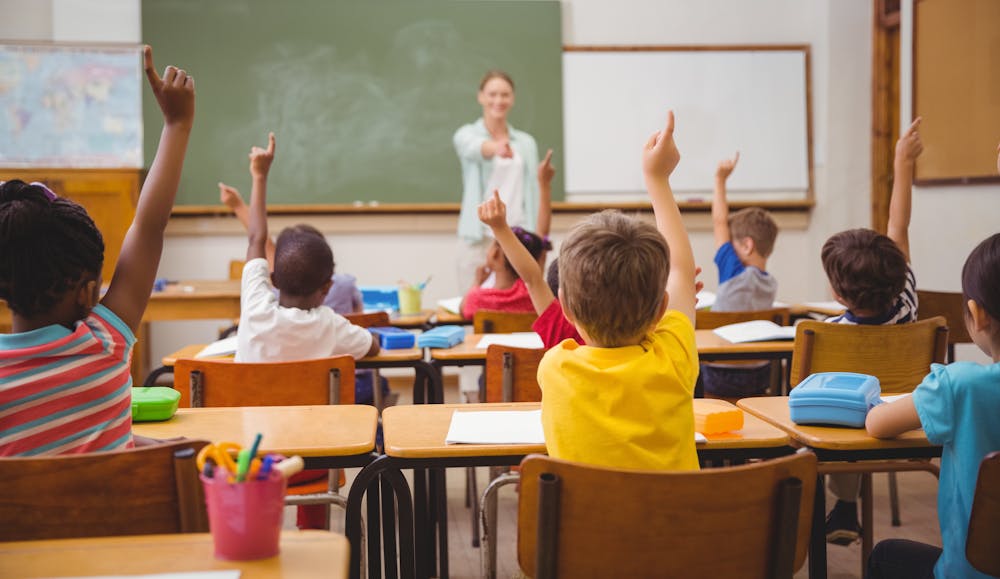


"Explicit instruction is based on a learning theory that suggests we remember what we think about most.

Explicit instruction is a term that summarises a type of teaching in which lessons are designed and delivered to novices to help them develop readily-available background knowledge on a particular topic.

Explicit instruction emerged out of research conducted in the 1960s and 1970s. Researchers sat at the back of classrooms and looked for relationships between particular behaviours of effective teachers and their students’ academic performance.

This research found teachers with the best results spent more time reviewing previously learned concepts, checking whether students had understood concepts and correcting misconceptions during the lesson. Explicit teaching practices involve showing students what to do and how to do it."



The argument of the article is supported by the research of John Hattie and Robert Marzano. Below is a short video of Hattie talking about the importance of direct instruction and why it has a positive impact on learning. ( I might have shared before) We all know about Hattie's work using mega data to make identify the key factors that determine student learning and the effect that each has on that learning. He measured the effect size of over 250 influences on learning and determined the average effect size to be 4. He determined that the biggest effect was collective teacher efficacy at 1.57 with explicit teaching methodology at .57 and inquiry based teaching at 4. Before accepting this research as gospel I believe it is necessary to remember that it is mega data collected from the past, from teaching past generations of students and not millennials, in a less technologically advanced home and classroom environment in which more traditional pedagogy was prevalent and new ideas like inquiry were not necessarily accepted, developed or practiced, and in an educational world that was dominated by direct instruction and encouraged little student agency regarding learning or curriculum. Of course this does not mean we should ignore this information but we do need to make it contextual otherwise we will reinforcing the thinking of Roger Ackoff, and getting righter at doing the wronger thing, hence making what we are doing wronger instead of righter.


Robert Marzano claims it is important to explicitly teach your students the things they need to learn. His review of research actually revealed it was the most important factor (teacher controlled) affecting students’ success. You need to tell them what they need to know and show them how to do things they must be able to do for themselves.
John Hattie did not review explicit teaching per se, but he did find that Direct Instruction was very effective. Direct Instruction involves explicitly teaching a carefully sequenced curriculum, with built in cumulative practice.
Furthermore, Hattie highlighted the power of giving students worked examples when explaining how to multi-step tasks. Marzano also highlights the importance of giving examples and non-examples (similarities and differences) of the concept you are teaching. For example, when teaching prime numbers it would be useful to highlight 2 as an example, and 9, 15 and 21 as non-examples to avoid confusion with odd numbers.
Marzano also found that you can explicitly teach deeper levels of understanding by using graphic organisers You should use graphic organisers to show how different ideas were related to each other (e.g. steps, cause-effect, hierarchy, lists, comparisons, etc.).
Neither Hattie nor Marzano believes that great teaching is nothing more than standing out the front of the class and imparting knowledge. However, both agree that telling students what they need to know and showing students what they need to be able to do are essential aspects of teaching.

Finally, it is important to remember that each student is an individual and differs from every other learner in our class. Hence, when we discuss students and how they learn best, we always need to remember that what might be good for one set of students may not work for others. Thus, understanding the strengths and weaknesses of as many strategies for engaging student learning makes us better teachers and allows us the skill to be able to adapt the learning environment in our classrooms to suit the needs of each of our students.

Monday, April 15, 2019

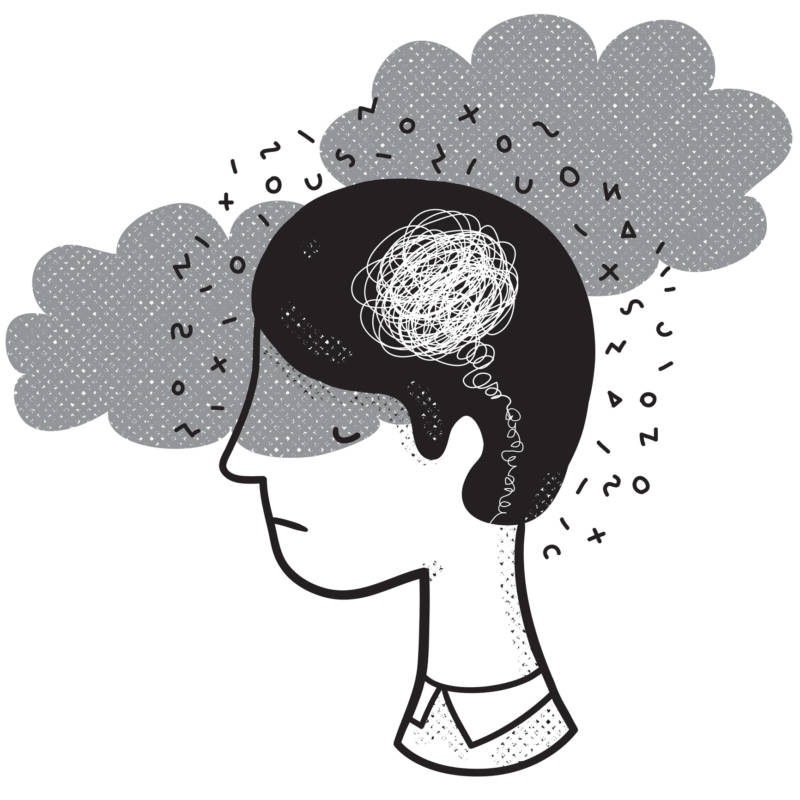
Food for Thought extra on Mindfulness.


(iStock/DariaNK)


A recent MindShift article highlighted some things teachers should be aware of if they’re bringing mindfulness into their classrooms. Students may have experienced trauma that makes sitting silently with their eyes closed feel threatening, and teachers can’t assume it will be an easy practice for every child. That awareness is important to create an inclusive environment, but it doesn’t mean that teachers shouldn’t cultivate their own mindfulness practice or use some techniques with students.

Often mindfulness is used as a way to help students build self-regulation skills and learn to calm down when they become frustrated or angry. Cultivating those skills can be powerful for students, but many teachers say mindfulness is crucial for themselves, helping them take an extra moment before reacting to students.

“The best way to practice trauma-informed mindfulness is [for teachers] to have their own practice and interpret the behavior of the youth through a trauma-informed lens, even if they never do mindfulness training with the kids,” said Sam Himelstein, a clinical psychologist, trainer and author who has spent most of his career working with incarcerated youth. He’s received a lot of questions about how to be trauma-informed while still using mindfulness in classrooms since the first article. He suggest nine guidelines for teachers that he uses to make sure mindfulness practice with youth is helping, not hurting.

1. Do No Harm

“The assumption behind that is that harm can be done,” Himelstein said. “If you teach someone mindfulness meditation who has had a lot of trauma in their life, in fact, harm can be done.” That’s important for teachers to know. Research on mindfulness shows the practice can bring up uncomfortable feelings, and layered on top of existing trauma can be frightening or psychologically dysregulating. That’s why Himelstein stresses that no one should be forced to close their eyes or sit a certain way.

“If you’re unintentionally portraying that it’s really important to close your eyes, they can misinterpret that,” Himelstein said. In fact, it’s common for folks who have been traumatized to misinterpret a neutral direction.

2. Establish a sense of safety

“There are some situations in some school settings where youth are not that safe because there’s violence that happens,” Himelstein said. “If you’re not in a place where kids feel physically safe, then you probably shouldn’t be doing any deep practices.”

Kids can feel vulnerable when attempting to be present in the moment, so physical safety is key. Establishing that kind of safety may take some extra culture-building in the classroom first.

3. Build relational mindfulness

This set of strategies is about building the type of community where students feel safe practicing mindfulness. Teachers can help make their classroom feel safe to students with clear boundaries that are predictable. Group norms or agreements developed with students are one way to do this.

“For people who have experienced trauma those things tend to not be present, so the more you practice predictability by practicing group agreements, and building authentic relationships between you and the youth, and among the youth, it starts to feel more safe,” Himelstein said.

It can be tricky to know if relational trust has been built, but Himelstein said when students are more willing to share openly about themselves or they’re relating class material to their own lives, that’s one sign they feel safe. Of course it’s complicated because of different personality types, some of which may naturally be more reserved. But even with introverted students, teachers can often tell if trust is there through their writing or if they share something out loud even once.

“You can check in with the youth and not just leave it up to your own assessment or guesswork in terms of where they’re at in feeling safe and that there’s trust in the room,” Himelstein said. If there’s more work to be done, trust games and icebreakers can help people get more comfortable.

4. Understand intersectionality. Be mindful of implicit bias and culture.

Mindfulness cannot be detached from the other ways teachers interact with students in the classroom. Himelstein said it’s important to take note if, for example, girls are being punished more harshly for the same behavior a male student exhibits, but for which he isn’t punished.

“It depends on the context, but I’ve definitely coached some teachers and therapists who work in diverse settings in terms of who they call on the most, who gets the most energy, how their expectations are shifting depending on different folks,” Himelstein said.

If students think a teacher is unfair based on race, gender, sexuality or any other identity marker, that will undermine the relational trust needed to facilitate mindfulness and mental health.

“In my work with youth, I never divorce the practice of mindfulness from the greater sphere of building an authentic relationship with that young person,” Himelstein said. “I don’t divorce intersectionality from the practice of mindfulness.”

5. Understand the "window of tolerance" and be on the lookout for it

Imagine two parallel lines. Within those lines is the window of tolerance for physiological arousal. Outside of that is when people may experience tunnel vision, when they can’t think straight. Outside the window of tolerance students may be hyperaroused when they’re extremely angry or hypervigilant. But students can also be hypo-aroused, when they’re disassociated from their surroundings. In both of these states, students won’t be able to follow directions.

Himelstein remembers meeting his wife for lunch after a therapeutic session with a client that triggered him. He couldn’t physically read the menu because his prefrontal cortex was offline. “My brain was down regulating,” he said. “I wasn’t quite in fight, flight or freeze, but I was on the way there.”

If teachers can recognize those moments with students, they can use other interventions to help students get back into the window of tolerance. Those might include listening to music, playing a rhythm game, dancing -- something that doesn’t require the student to process directions.

A teacher might notice a student is getting triggered and naturally take a break from instruction to listen to some music or play a quick game without calling attention to the student who is triggered. This works better if these types of movement or music breaks are already part of the DNA of the classroom. Then it doesn’t feel odd or out of place to students when a teacher uses it as a tool to intentionally support a specific student.

“You’re hoping in some way the music moves them, not emotionally, but there’s something about the music they like,” Himelstein said. “Maybe they get that head bob going. That’s what you’re looking for.”

He remembers one young woman he worked with who had been estranged from her father for several years because of his drug addiction. She finally felt ready to reach out to him to try to build a new relationship when she found out he had died of an overdose. Himelstein was with her when she got the news. The young woman was in shock and no mindfulness techniques would have worked at that moment. Instead, Himelstein put on a song he knew his client liked, and they sat and listened until she came out of shock and back into her window of tolerance.

6. The paradox of mental training

The paradox is that paying attention to the present moment -- the heart of a mindfulness practice -- won’t always make a person feel calmer. But, at the same time, practicing mindfulness when one isn’t upset builds a toolkit that could be useful to stay calm in stressful situations. Himelstein said this is a contradiction teachers have to embrace in this practice.

Deep breathing exercises or a body scan are strategies to practice in a calm state. They can help with stress reduction and emotional management. The goal is to make them part of everything that happens in the classroom so they’re second nature, and students can draw on these tools when they need them without thinking.

Himelstein trains youth and guards in juvenile detention centers in these techniques. Recently a young person told him that when a guard called him a name he naturally took a deep breath, providing him the slightest bit of space to consider the consequences of taking action, and preventing him from getting triggered.

“I’ve heard that in juvenile hall, in education settings, in so many situations,” Himelstein said.

7. When teaching mindfulness, prioritize somatic-based exercises.

“The body tends to have the ability to help ground people a little more, or at least not trigger as much,” Himelstein said. Especially if students are not used to mindfulness, or don’t feel comfortable with it, keeping them out of their heads can be a good thing. Instead focus on how deep breathing feels in the belly and the chest. Do body scans or remind young people to think about the sensations in their bodies.

“When youth don’t have a clear sense of what they’re supposed to be doing, and it’s not as tangible, it’s easier for their minds to wander and stumble upon traumatic memories,” Himelstein said.

8. Don't over-identify with mindfulness logistics

It can be counterproductive to insist too strenuously that mindfulness look a certain way. Things like keeping eyes closed, holding the hands in a certain way, or having a particular body posture really don’t matter, and can lead to power struggles.

9. Think about daily mindfulness interventions.

There are lots of informal ways to bring some of the benefits of focusing on the present into the classroom. It might become routine at the start of the day, or when class begins, to do a mindful check-in: Each student takes a deep breath, and shares how they are feeling at the present moment. Himelstein always encourages youth to use a real emotion like angry/frustrated/happy/sad, as opposed to more generic statements like good/bad. It’s also not too much of a stretch to add some element of academic content to these activities.

"It's a great way to embed a mindfulness practice in the DNA of the classroom and also you can easily add a prompt to the end of it," Himelstein said.

https://www.kqed.org/mindshift/53228/nine-ways-to-ensure-your-mindfulness-teaching-practice-is-trauma-informed?utm_medium=Email&utm_source=ExactTarget&utm_campaign=20190414MindShiftNewsletterSubscribers&mc_key=00Qi000001WzNqREAV

Sunday, April 14, 2019

Food For Thought: Future of work

A short Food for Thought this week that I shared with Studio 5 before their parent meeting last week and with SLTA to be discussed regarding the creation of an AtL skill continuum that unifies the key components of learning at ISHCMC with our three programmes, our mission and our Learning Principles.

This 29 minute presentation by Heather McGowan, The Future of Work, links very well with thinking regarding the impact of the 4th Industrial Revolution. Lots of excellent materials and research covered in the presentation and the overriding conclusion that work in the future will be about continuous learning. This links strongly with Yuval Harari's thinking and how to avoid the impending move in work from exploitation to irrelevance. Of course this can be achieved by staying up to date and continuously learning. But to do this as Heather McGowan points out you have to be constantly learning new things to stay relevant. Therefor you need to be taught how to learn at school so that you can apply this through your life at work. As we have said many times this further relates to the need to focus on the skills related to how to learn rather than just the content of the learning.


Of course there are opposing points of view and we do need to be careful not to throw the baby out with the bath water, but at present I do believe we are going in the right direction and have to prioritize the development of AtL skills, their development and measurement through assessment for next year. Next week I am going to post a provocation that to some degree questions our mission and pedagogy, and in others may strengthen it, by ensuring it is part of what we take into account when we think about how students learn.


Saturday, April 6, 2019

Food for Thought: For you and your students lives.

This week's Food for Thought is as much for you and your family as a member of society as much as it is for you as an educator. As a school and through our learning principles we encourage students to critically think and learn things that will challenge them. Through this process they can learn who they are as individuals and hopefully become empowered. However, there are certainly forces working in the opposite direction that would like all members of society to be predictable, easily led and compliant to the dictated norms of society.

Hence I want to share an interesting article and through it a good book.I think that you will find the article interesting and if you want to go deeper I have a soft copy of the book, “The Age of Surveillance Capitalism: The Fight for a Human Future at the New Frontier of Power”

There is so much that we have been misled about and the more I read, the more worried I become about the our future and our students' freedom. I have always been a bit of a conspiracy thinker, because being working class, I never trusted the rich or the authorities. 
But now with big data and AI in the hands of governments and corporate giants some of my fears may be coming true. 

In the article, How Big Tech Built the Iron Cage, there is plenty to think about regarding the erosion of our personal privacy and how it has all been allowed to happen to us all. Here is how the article concludes:

"Indeed, most of us don’t want to live like this, heads bent over a handheld device, twitching from one social-media outlet to another. Insidiously, though, the technologies that mediate our existence provide an illusory sense of mastery, as we tap a screen and summon brightly colored sweaters to our door. “The precise moment at which our needs are met,” Zuboff writes, “is also the precise moment at which our lives are plundered for behavioral data.” We find ourselves in an elegantly designed, frictionless trap."

Having shared the article with a few people I was then sent this video from  'State of Surveillance' with Edward Snowden and Shane Smith (VICE on HBO: Season 4, Episode 13) which is a must watch if you want to know more about how we are all being watched and tracked through the technology we are using. This links with several other sources that I have shared with you this year, and although a bit older than some adds further evidence that points to the fact that our privacy is being eroded systematically and deliberately by governments and corporations and there is little that we can do about it. The video ends with the question that Snowden raised at the time of his revelations about the NSA, today's government might be ok but who says that is going to be the same in the future, and he jokes about what would happen if Donald Trump came to power.


How many of you knew the information that has just been shared? As always I come back to what are we doing in school? How many of our graduates are aware of the deeper dangers of all the 'cool' technology that they surround themselves with and use everyday? have they thought about protecting their freedom? Then of course we have to ask how are our digital citizenship courses in homeroom and advisory approaching these questions? By having 1:1 tech from Grade 3 are we doing our students a dis-service or can we use it to ensure they are aware and know how to have technology in their lives but without being controlled by it? So many questions that we need to answer as we prepare students for their future.

Saturday, March 16, 2019

Food For Thought: Discovering who we are.

This week I wanted to share three separate sections to my Food for Thought that I hope will help you know more whilst at the same time encouraging deeper thought about where we are going and who we are on our journey towards the 2020's. As you know I have been travelling a lot recently and on returning home have felt grateful to be able to come home to two loving and caring people, Nok and Kenneth, whilst being equally grateful for enjoying a good life with you all. In this 2 minute video by Deepak he talks about the importance of being grateful and focusing on that to create abundant consciousness, something we should regard as more important than the economics of abundance that so much of the world is focused upon.


Last week I posted on my Food for Thought for Parents a new resource from Commonsense Media called the ultimate guide to Facebook. Thought that you might be interested as well as it answers some frequently asked questions. Hopefully this information will give you the tools to guide both parents and students in their use of youtube.

  • What's the best way to keep tabs on my kids' YouTube-watching?
  • How can I find out what my kid has been watching on YouTube?
  • How can I minimize my kids' exposure to iffy videos on YouTube?
  • How can I find out who's behind the videos my kid watches on YouTube?
  • How can I manage the related videos on YouTube?
  • Can I get rid of ads on YouTube?
  • What should I say to my kid about all the mean comments people leave on YouTube?
  • Are there any parental controls on YouTube?
  • How can I find good stuff on YouTube? 

Finally,  I couple of thought provoking 4 minute videos that link together on the theme raised last week by Yuval Harari, who am I? We know this is going to be important because the better we, and our children and students, know ourselves the less control AI will be able to exert over us. The first by Jim Carey and Alan Watts encouraged me to think about the challenges that we need to understand before we can prepare our students to think deeply about who they are.  As we all know this is not an easy task and in this short video it becomes clear that it is probably more complicated than it at first may seem. How many of us have truly discovered who we are?


Discovering who we are and being brave enough to be that person is the theme of this upbeat video from Way We Work TED series. This video is about bringing your whole self to work. How many of us really do that? How many of us only bring others perceptions of ourselves to work each day? How can we encourage our students to be themselves? This all links back tour mission and the achievement culture and ensuring that our rules and systems do no harm to each person in our community and that they allow each and everyone of us to flourish alongside each other.


AND for those who want to go deeper here is the Metaphysics of Inception, which raises important questions about our reality. It is 20 minutes of deep thinking about who we are and what is our reality? A quote in the narrative that I found very insightful is" is the idea that our reality can happen unconsciously.  If our reality is dictated by the mind this means that there are constructing forces beyond our conscious presence as our mind contains subconscious layers and emotional currents that run deeper than our immediate awareness and this adds a whole new level of vulnerability, for it implies our reality and by extension our identity is susceptible to manipulation." This returns us the the dangers of Big Data, Algorithms and AI to control us and our reality. To an extent this manipulation and control has already begun because of our attachment to our tech world of digital devices and social media.


Sunday, March 10, 2019

Food For Thought: Are we preparing our students and children for these challenges?


The first media clip is a podcast by Rebecca Solnit. (Please listen to the first 26 minutes as I'm certain her provocative thinking will engage you all in deeper thinking, especially Andrea and Jody, as she ends her dialogue by saying perhaps Librarians should run the world.)  Rebecca Solnit is an American author who often writes on the environment, politics, place, and art. Her writing has appeared in numerous publications in print and online, including the Guardian newspaper and Harper's Magazine, where she is the first woman to regularly write the Easy Chair column founded in 1851. She is also a regular contributor to the political blog TomDispatch and to LitHub. She is particularly concerned about Climate Change. In this podcast she questions our modern way of living, raising many questions about what we are doing, why we are doing it, and where it is all going?

Episode 65: Rebecca Solnit


Rebecca Solnit raises questions about power and who is running the world. In this 9 minute conversation Russell Brand and Yuval Harari discuss this exact question and explain how leaders and politicians today have far more power than in the past but conceal that from us so we don't really know who has the power. By doing this Brand feels it allows the rich and powerful few to exploit the masses in their countries. Although this is obviously a socialist few of the world, the global economic statistics and models regarding income distribution do support the fact that a very small percentage of the population of most of the world's countries hold the majority of their countries wealth. They conclude that to have successful change one has to clearly identify where the power lies and to have a vision.


My final provocation for this week is a 12 minute keynote that Yuval Harari gave to students about the Future of Education. This speech, without being too scary, does point at the impending challenges that AI will present for the next generations. I shared this video clip at the recent Cognita Asia Leadership Conference and through it, and a number of provocations, encouraged participants to ask how are we preparing students for this changing world and what are we doing about changing our schools. Participants were encouraged to make changes to their classroom and have that grow to change their schools. As you know, I see our present education system as broken and not needing fixing but needing changing entirely. Going back to the Solnit podcast she explained why humans don't want to change regarding things like Climate Change even when making the change could benefit us all. I feel the same about education, if we could revolutionize school to be fit for the purpose of preparing students for the future, all stakeholders; students, parents and educators could be richer in their everyday lives.


We are on a journey together and must not stop moving forward. However, linking all these sources together we must ask ourselves where will power lie in a future world when authority lies with AI and Big Data? Who controls the power that accompanies AI and what can we do to create an educational system that adequately empowers our students to face the challenges to their freedom, well-being and happiness that are likely to arise in the future.

Sunday, March 3, 2019

Food for Thought: More findings on importance of mindful activities.

As we move further away from our winter break and Tet. Have an increased focus for our older students on their summative end of year examinations. Face increasing temperatures, as we move from the cooler dry season towards the onset of the rains. Wait for the arrival of seasonal flu and colds, it is clearly a time when we all need to be taking care of ourselves, physically and social and emotionally. The more I read, the more convinced I become that the best way of doing this is through meditation and mindful activities. When ISHCMC began its journey with its new mission and its link to mindfulness through energized and empowered learners the rationale was not as strong as it is today. Today we have evidence from more and more studies and sources that mindfulness brings with it a huge number of benefits that assist us as humans struggling to deal with the challenges of the 21st century. In this week's Food for Thought I am sharing two articles. The first is from one of my favorite sources, Mindshift, and focuses on data from a recent in school study on the important impact of making time for Mindfulness in schools. 

The second article is an essay from AEON magazine, Breathtaking, by M M Owen a British nonfiction author. He obtained his PhD at the University of British Columbia, and runs an animation studio called Misfit Productions.on the importance of breathing. This is a long article so I have taken out what I think you would like to read to increase your personal understanding of the importance of deliberate breathing on our well-being. Even in the section I have included there are lots of excellent links for those of you who enjoy developing a deeper understanding.

How Making Time for Mindfulness Helps Students

 (iStock/Valeriy_G)
"Not knowing the answer to a question when you’re called on in front of the entire class. Forgetting your homework. The kid behind you pulling your hair. School poses a lot of stressful moments, but how children (and teachers) react to them can make all the difference.
A new study suggests that mindfulness education — lessons on techniques to calm the mind and body — can reduce the negative effects of stress and increase students’ ability to stay engaged, helping them stay on track academically and avoid behavior problems.
While small, the study of sixth-graders at a Boston charter school adds to a still-growing body of research about a role for mindfulness in the classroom. In recent years, the topic has excited researchers and educators alike as a possible tool to help students face both behavioral and academic challenges by reducing anxiety and giving them a new way to handle their feelings and emotions.The Findings
After finding that students who self-reported mindful habits performed better on tests and had higher grades, researchers with the Boston Charter Research Collaborative — a partnership between the Center for Education Policy Research at Harvard University (CEPR), MIT, and Transforming Education — wanted to know if school-based mindfulness training could help more students reap similar benefits.
They designed a study focusing on sixth-graders in another Boston-area school. The study, published in a white paper by a team including Martin West of the Harvard Graduate School of Education, showed that sixth-graders who participated in an eight-week mindfulness were less stressed out than their classmates who hadn’t. Practicing mindfulness had helped hone the ability to focus in the moment, expanding students' capacity to learn and regulate their emotions.

Four times a week, instructors from Calmer Choice, a Massachusetts nonprofit specializing in mindfulness education, taught the group techniques and led them through practices, like focusing on a rock for a minute, then discussing when their mind wandered and refocused on the rock. Another group of sixth-graders took computer coding during that time instead. The students were randomly assigned between the groups.
At the end of the eight weeks, the mindfulness group reported being less stressed than they had been before the mindfulness education, and better able to practice self-control. About half of the students also volunteered for brain scans, and those revealed positive effects for the mindfulness group, too: their amygdalas — the part of the brain that controls emotion — responded less to pictures of fearful faces than they did prior to the mindfulness work, suggesting their brains were less sensitive to negative stimuli, or, in other words, that they were less prone to get stressed out and lose focus. The group who attended coding classes didn’t see the same benefits.
The findings suggest that the mindfulness instruction helped boost students’ attention skills, as well as develop coping mechanisms for stress. The authors maintain that this kind of evidence could be especially useful in efforts to support students suffering from trauma and other adversities that trigger stress in the body, hurting students’ ability to succeed.Bringing Mindfulness to Your School

The paper includes recommendations from educators and leaders of mindfulness-based education programs for implementing mindfulness in your own school:

  • Build consistency and school-wide buy-in. Make time for staff and students to learn about the theory and science behind mindfulness, so students know how to talk about mindfulness and understand its purpose. Creating consistent space for mindfulness practice – like guided meditations — and theory in the school day can positively affect the entire school culture, emphasizing acceptance, self-care, and empathy.
  • Provide teachers with dedicated time to engage in mindfulness practice themselves. In order to help students reap benefits, teachers also need time and support in adopting it. Research has also shown mindfulness to be helpful to teachers, improving their own emotional wellbeing, helping them understand student perspective, and freeing them up to be more effective in the classroom.
  • Allow students to make their own time for mindfulness. Encourage students’ awareness of their own emotions by allowing and encouraging them to identify times when they can use and practice mindfulness. In order to adopt mindfulness as a tool for mental health and happiness, students have to have the space and time to practice it."

Breathtaking: From first cry to last sigh, we do it without a thought. Yet the benefits of conscious breathing are truly remarkable

Scientific research on conscious breathing is hard to gather up. Some of it is published in leftfield journals, and studies mix terminology (deep, slow, controlled, yogic, abdominal). But caveats aside, hard findings are there. All the good research accepts that the chief physiological mechanism is the interface of conscious breathing with the parasympathetic nervous system. The range of claimed effects is bewildering in scope.

Here is what seems solid: there is some evidence that yogic breathing lowers blood pressure, improves diabetic symptoms, can alleviate depression, and can help with asthma and the management of migraines and chronic pain. There is good evidence that yogic breathing reduces inflammation and boosts the immune system. Conscious breathing appears to be associated with moderate improvements in many areas of cognition, especially attention and memory retrieval. A recent study revealed that it ‘remarkably enhances retention of a newly learned motor skill’. There is robust evidence that deep breathing reducesstress and any form of anxiety.

Cast out into the more isolated or less robust studies, and there is some evidence that deep breathing can help with poststroke aphasia, atrial fibrillation, heart failure, ADHD, chronic neck-pain, menopausal symptoms, abstention from smoking, recovery from bypass surgery, wellbeing in breast-cancer patients, and more. Some of the claims made are truly grand. Though it sounds like pure woo-woo, a study from the august Annals of the New York Academy of Sciences found that yogic breathing ‘might reduce the incidence and progression of cancer’.

Strange but true: breathing is keeping you alive, but it’s also killing you

The only way to read this fireworks display of benefits is to conclude that intentional deep breathing is good for you – all of you. And that, though they had grander aspirations than the medicalised West, the ancient mystics were right: the breath has far-reaching powers............
Interestingly, in these older traditions, it isn’t only about breathing slowly and deeply. In Kundalini yoga, there are practices where one suspends the breath altogether for longer and longer stretches. In an appendix to his book The Doors of Perception (1954), Aldous Huxley describes how such a practice ‘permits the entry into consciousness of experiences, visionary or mystical, from “out there”’. In 1837, an ascetic yogi used meditative breathing to help him survive being buried alive for 40 days. Allegedly. Such otherworldly efforts are similar to Taoism’s so-called embryonic breathing, where the breath is made so sedate that a feather held under the nose remains still – one of a vast set of cryptic practices aimed at redirecting sexual energy to achieve immortality.

Interestingly, the reverse – hyperventilating – also has its spiritual side. Yogic breathing includes the practice of kapalabhati, or ‘breath of fire’. A more adventurous teacher might also have introduced you to this at the start of a yoga class. You sit up tall, then breathe quick and hard and loud through your nose, snapping your stomach on the exhale. In yogic parlance, this type of conscious breathing promotes ‘detoxing’ and ‘inner cleansing’.

To a skeptic, these aren’t encouraging descriptors. But they receive vague validation through one of the most famous breathing specialists of our current moment, the eccentrically charming Wim Hof. This extreme athlete’s breathing technique includes deep breathing, but also periods of controlled hyperventilation. In a small study, Hof’s approach was shown, rather amazingly, to increase human resistance to acute E coli exposure. Paradoxically, Hof’s work suggests the opposite of deep breathing might also help to boost immunity. This is hard to reconcile with the rest of the scientific picture as it stands. After millennia of scrutiny, a full understanding of the breath eludes us.........

Strange, that breathing can be at once so everyday, so forgettable – and also the material plane on which all of life and death manifests. In not exactly the sense that my meditation teacher meant it, the breath is without doubt, from the human perspective, the most powerful force in the entire Universe. Yes, conscious breathing is a fad; yes, there is something faintly ridiculous about people learning how to do something that they do every second of their lives without even thinking about it. But as discovered by diverse spiritual traditions, spread over thousands of years and divided by thousands of miles, it is worth thinking about.

Though I’ve remained an on-again-off-again meditator, developing the instinct to remember my breath comes to my rescue almost every day. My motivation for going on that meditation retreat persists; my thoughts can still move too fast, and they can be awfully loud. But heaving my attention away from the surging river of consciousness back to my body – back to those older parts of me that in ancient incarnations of my DNA were doing their mineral, material work long before evolution conjured up the chattering forebrain – helps me to turn down the noise. Whenever my mind starts to trample me, whenever I feel my perception turning skittish and clawing, I go to the base of my stomach, and I make it the limit of my thought. It is always there, this respite, this remembrance that everything layered on top cannot possibly be as important as the miracle of my body keeping me from death. There is a perception in this, I suppose, of something like māyā. Some vast, secret slipstream, behind the sound and fury.

Mine is a specific use of conscious breathing, but they all come down to this: to connect with the breath is to connect with what is most vital in you, as a creaturely thing. Whatever your suffering, if you find yourself needing to feel more at home in this world and in this body that carries you through it, let a lungful of oxygen fill you up. Make a practice of it, if you like. There’s a good chance it will help. Come back to the core. All of us are but borrowing our oxygen, for a while.

There is a new Oprah and Deepak 12 day meditation course beginning on the 25 March if you want to join here is the sign up link.